Showing posts with label sheep. Show all posts

March 8, 2010

Monday's big box o' links

Musher Sebastian Schnuelle [first in the 2009 Yukon Quest, 2nd in the 2009 Iditarod] rocks the earflaps-up look at the Iditarod restart in Wasilla. ADN photo by Bill Roth.

The official Iditarod site is awful, and not just because of a certain inescapable quitter. So ditch the official site, race addicts, and click on this link for awesome Iditarod coverage courtesy of the Anchorage Daily News. Feature stories, a blog, tweets, interactive maps: ADN wins it in a walk. I'm cheering for DeeDee Jonrowe [and her mom] and Colleen Robertia:
Several dogs in Robertia's Rogues Gallery Kennel — mostly "runts, rejects, retirees or rescues," she said — were rescued from the Kenai Animal Shelter and Alaska's Extended Life Animal Sanctuary in Nikiski. Others weren't wanted or needed by area mushers.

"I think they ended up taking two or three dogs from us," Tim Colbath, founder of the sanctuary, said of the Robertias.

"I hope she can finish it. To be able to take the time and knowledge to go through the rescues and get them to work together like that is just phenomenal." [Source: ADN.]
Penny, Colleen's lead dog, weighs a whopping 29 pounds — all of it heart. [That's Penny, top left, from the ADN.] Go, Colleen and Penny!

A few fave photos from the ADN:
The dangerous Mr. Mackey
Team Jonrowe
OMG, this is begging for a caption
Karen Ramstead's gorgeous Siberians

*************

Have an elderly Rottweiler? Dr. David J. Waters [pdf] really wants to meet you. Actually, he wants to meet your Rottie. Dr. Waters is traveling from coast to coast in order to see as many geriatric Rottweilers as he can:
The complete itinerary of the tour includes: March 11, Harrisburg, Pa.; March 12, Holliston, Mass.; March 13, Philadelphia; March 15, Keysville, Va.; March 16, Columbia, Tenn.; March 19, Cambridge, Wis.; March 20, Riverside, Iowa; March 21, Alma, Kan.; March 23, Red Oak, Texas; March 24, Castle Rock, Colo.; March 27, Colorado Springs, Colo.; March 28, Tijeras, N.M.; March 29, Waddell, Ariz.; March 30, San Diego; April 1, Pacific Palisades, Calif.; and April 3, Seattle.

Waters leads a research team that studies aging and cancer in pet dogs. The research includes the study of exceptionally long-lived Rottweilers - individuals that have lived to at least 13 years, which is equivalent to a human living to 100.

"These exceptional dogs have lived at least 30 percent longer than average for their breed," Waters said. "They have dodged cancer and other life-threatening diseases of aging. We believe studying them can shed light on what it takes to live well."

Over the years, Waters and his team have tracked the lives of more than 140 long-lived Rottweilers. Today, however, their database is down to just 15, hence the tour to meet these exceptionally aged canines.

"From questionnaires completed by owners and veterinarians, my team has validated dates of birth and collected a mountain of information about these dogs, including medical history, diet and dietary supplement usage, and parents' longevity," said Waters, who is also associate director of Purdue's Center on Aging and the Life Course and professor in the Department of Veterinary Clinical Sciences.

At each stop, he will perform a physical examination, collect DNA samples, and record measurements such as height and chest and belly circumference. He will observe each dog in its home environment and query owners on what makes their dog exceptional.
Read more here, from Jennifer Viegas at Discover News: Oldest Rottweilers Inspire 'The Old Grey Muzzle Tour'.

*************

Keep. your dog. on a damn. leash. [H/T: DeltaBluez Stockdogs.] Heather points out that a little training wouldn't hurt, either. Speaking as one who has owned sheep: most people who say their unleashed dog has a reliable recall are either delusional or lying.

*************

Videos:
Canadian dude needs some viral help for a worthy cause. You got it, dude.
I love Local Commercials salutes Butt Drugs of Corydon, Indiana.
OK Go - This Too Shall Pass - Rube Goldberg Machine version. Yes, 20 billion people have seen it already, but maybe you missed it. I'm here to help.
A journey through Asia. Moving and beautiful.

*************

What an 8.8 [and the ensuing tsunami] can do, from The Big Picture.
  • Conception, Chile, shifted 10 feet to the west.
  • Santiago, Chile’s capital, was displaced about 11 inches to the west-southwest.
  • Buenos Aires, the capital of Argentina, moved about 1 inch to the west.
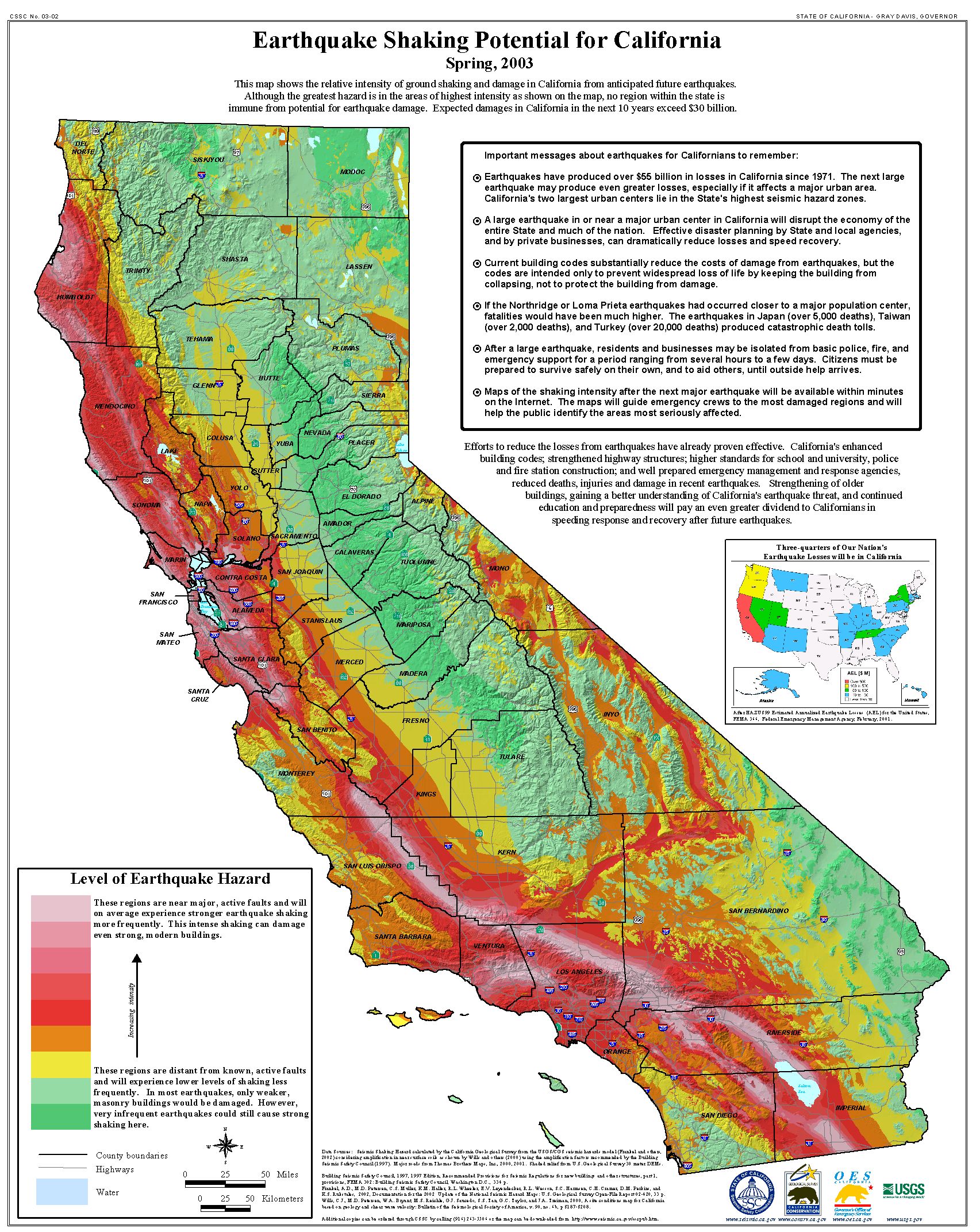
Sure am glad a 7.5 is the most we can expect in these parts! [See A Faults (pdf).] Oh, yeah, nothing to worry about here.

Seriously folks, those of us along the southern [strike-slip fault] San Andreas will never experience the kind of subduction zone thrust-faulting they have in Chile [and in Alaska and the Pacific Northwest]. San Andreas — big-ass quakes. Subduction zones — frikkin' humongous quakes.

*************

Last, but not least — if you plan to be in the San Diego area in late March, you might want to attend Safer Pet Vaccination and Health Care: An Educational Seminar and Benefit. You'll spend the day with pet vaccination experts Drs. W. Jean Dodds and Ronald D. Schultz, and proceeds will go to the Rabies Challenge Fund. The seminar/benefit will be held at the Del Mar Hilton [across from the Del Mar Fairgrounds and Racetrack] on Sunday, March 28, 2010.

February 21, 2010

Pringle of Scotland - Life Behind The Scenes

If this video had a rating, it might be PG-13. Also: manky means "extremely gross." But you knew that.


February 14, 2010

ASI proposal threatens livestock guardian dogs

Livestock guardian... er, protection dogs protect sheep from coyotes, wolves, bears, eagles, domestic dogs and thieving humans. This is good. But federal lands are public lands, and on federal grazing allotments conflicts may arise between flock guardians and someone who, for example, happens to be riding her mountain bike through the flock after dark, screaming hysterically.

In that sad case a woman was mauled and the flock owner, whose LGDs were confined during the day of the mountain bike race and released at sundown, was convicted of owning vicious dogs. His guardian dogs were killed. [Read the ongoing discussion on the Sheep Production Forum.]

At the American Sheep Industry Association's Annual Convention in Nashville last month, the ASI working group on Livestock Protection Dogs was feeling the heat:
ASI strongly believes that the use of LPDs on federal grazing allotments is in serious jeopardy, and anticipates three possible outcomes: 1) Federal agencies develop their own mandatory regulations for the use of LPDs on grazing allotments; 2) Federal agencies completely eliminate the use of LPDs on grazing allotments; or 3) ASI takes a proactive management position and adopts a stringent LPD certification program that sets high industry standards for the use of LPDs with the intent to effectively manage and maintain the use of LPDs on federal grazing allotments.
That quote was taken from a five-page document the ASI is calling its draft management program for livestock guardian dogs. A certification program is recommended, and there are guidelines for everything from socialization and training to coat care and mandatory neuter. [I suffered AB 1634 flashbacks.]

Sheep Production Forum owner Bill Fosher doesn't like the proposal either, and he's a sheep producer and guardian dog owner. He writes:
While I can understand and appreciate that the ASI is trying to take a pro-active stand, I believe that its proposal will do more harm than good. You can read it for yourself here. ASI is seeking input, and I believe that every sheep producer who uses livestock guardian dogs should read the document carefully and comment extensively.
Go to the Edgefield Sheep blog to read Guard dogs under threat, Bill's excellent commentary on the ASI proposal. And if you raise sheep and rely on livestock guardian dogs, please send your comments on the proposal to the ASI.


[In the photo: woman meets livestock guardian near Cabrales, in northern Spain. She's a dog person, but this working mastiff growled at her husband, who kept his distance (and used a zoom lens while she examined the spiked collar). The blog post he wrote about the encounter and about the return of flock guardians to the Spanish countryside is called La Torna del Cancerbero (The Return of Cerberus).]

November 17, 2009

Coyote news


Coyote at Canyon, by jrtchris on Flickr.

From prairie naturalist Trevor Herriot's Grass Notes comes word that the government of Saskatchewan is offering a $20 bounty on coyotes. An excerpt from Trevor's post:

The provincial Environment department has ecologists who know that this kind of measure does not stop coyotes from eating livestock. Our universities have biologists and ecologists who could explain what happens when bounty hunters start killing a predator like the coyote. As a “k-selected” species, the coyote regulates its population according to food supply and mortality rates.

If there is abundant food but adults are being killed, the survivors, who are also the more successful and wise, immediately increase the brood size and numbers of pregnant females within the pack. Trying to control coyote populations by killing them has been compared to bailing a boat with a sieve.
Then why the bounty? Trevor again:
An interesting sidelight on the coyote bounty: I have heard via the grapevine that some of the loudest complaints have come from sheep farmers north of the Qu’Appelle in the Cupar/Lipton area, where British farmers have moved in recent decades to set up farming [...] They are undoubtedly a welcome addition to the local farm community, but if they come from Scotland or England they arrive with a certain set of expectations and experiences — about wildlife and about the government’s role in making the land safe for farming.
Trevor's post reminds me of the well-known [to border collie people, anyway] description of the shepherd's dog in England, written by Johannes Caius 400 years ago:
Our shepherdes dogge is not huge, vaste, and bigge, but of an indifferent stature and growth, because it hath not to deale with the bloudthyrsty wolf, sythence there be none in England, which happy and fortunate benefite is to be ascribed to the puisaunt Prince Edgar, who to thintent ye the whole countrey myght be evacuated and quite clered from wolfes, charged & commaunded the welshemë (who were pestered with these butcherly beastes above measure) to paye him yearely tribute which was (note the wisedome of the King) three hundred Wolfes. Some there be which write that Ludwall Prince of Wales paide yeerly to King Edgar three hundred wolves in the name of an exaction (as we have sayd before.) And that by the meanes hereof, within the compasse and tearme of foure yeares none of those noysome, and pestilent Beastes were left in the coastes of England and Wales. This Edgar wore the Crown royall, and bare the Scepter imperiall of this kingdome, about the yeare of our Lorde nyne hundred fifty, nyne. Synce which time we reede that no Wolfe hath bene seene in England, bred within the bounds and borders of this countrey, mary there have bene divers brought over from beyonde the seas, for greedynesse of gaine and to make money, for gasing and gaping, staring, and standing to see them, being a straunge beast, rare, and seldom seene in England.
"... about the yeare of our Lorde nyne hundred fifty, nyne. Synce which time we reede that no Wolfe hath bene seene in England." All killed.

It gives me a certain satisfaction to know [with as much certainty as I know anything] that the coyote will escape that fate and dance on Man's grave at the end, bounty or no. Check out Camera Trap Codger's photo of the trickster: Coyote beautiful.

Related:
Coyotes at home and away

October 30, 2009

Beautiful Sheep


Sheep portraits by fashion photographer Paul Farnham, from the beautiful endpapers of Beautiful Sheep.

Had an "I miss my sheep, poor me" moment in the local Barnes & Noble and wound up driving home with a copy of this lovely book.

Not that you actually need a book to learn a bit about different types of sheep — there are websites like this one with photos and info on gazillions of different breeds of sheep. Beautiful Sheep takes a less encyclopedic approach, and I like the results.

To begin with, the book restricts itself to several dozen sheep breeds of England, Scotland, Wales and Ireland: the breeds a North American with border collies might find most interesting. The photographs are straightforward and respectful — fans of the William Wegman, dress-'em-as-people approach should give this book a miss. Is it just me, or do William Wegman's dogs always look wretchedly unhappy? Did you ever see a Wegman Weimaraner that didn't have its tail tucked? Me neither. And don't tell me looking miserable is just a Weimaraner thing. It isn't.

Topic. Excellent photos in Beautiful Sheep, and a info page for each breed. The breed write-ups are the work of Kathryn Dun, a veterinarian and Honorary Secretary for the Sheep Veterinary Society. She knows a mule from a terminal sire, in other words. According to the author blurb: "Kathryn helps show her family's North Country Cheviots and Scotch Mules at numerous events, including the Royal Highland Show." Cheviots! [Strangely, there is no studio portrait of a Cheviot in this book. I can't imagine why.]

Fascinating to look at the photo of a young Suffolk ram [incorrectly labeled a yearling ewe, to what I hope is the proof-reader's eternal shame] and compare it to the photo of an American show Suffolk in the collection of black and white photos at the back of the book.

Is Beautiful Sheep worth $13.57? [Or the 20 bucks I paid at Buy N Large?] I think so: it's attractive, informative, and a great book to keep handy when you're choosing stock for a dream farm... a little place in Central California with Bluefaced Leicesters and a Hill Radnor and a Welsh Mountain Badger Face and a Lincoln Longwool and many, many Cheviots...

Beautiful Sheep: Portraits of Champion Breeds, by Kathryn Dun, with photography by Paul Farnham.

October 9, 2009

They paved paradise and put up a Heritage Park

With a big ol' historic schoolhouse and, yeah, a parking lot.

That's the schoolhouse, or a section of it, anyway, on the left. The local Historic and Scenic Preservation folks put it in the middle of my sheep pasture the city-owned property [a former dairy farm] where I kept my sheep for the last twenty-some years. "At its new location, the historic building will serve as an events hall and arts center and also act as a community meeting place for the city," said a local paper about the building that appeared in my pasture the "lot" overnight. Yippee.

So I sold the last of my ewes today, and the feeders and the water troughs and some meds and a drencher, and for the first time in a quarter-century I have no sheep. It doesn't feel at all like the end of the world [one door closes, another door yadda yadda], but it does feel kind of weird.

Good thing: the last eight ewes went home to San Diego County with a border collie person I've known forever. I'll miss my Cheviots [weeps]. I won't miss the hay bills. Should have taken more photos of the place back in the day. Good times, those.
Don't it always seem to go
That you don't know what you've got
Till it's gone
They paved paradise
And put up a parking lot [Joni Mitchell, Ladies of the Canyon]

January 14, 2009

Incredibly cool sheep barn

For when I win the lottery.


In the city of Almere, Netherlands, 70F Architecture projected this beautiful sheep stable that can house from 100 to 150 sheep.
More photos and info at CoolBoom.

December 10, 2008

Shepherd's dog, 1490


Detail from The Nativity, by Ghirlandaio [Benedetto Bigordi].

1490. This painting was made before there was a New World, before Shakespeare, before Quixote, before Cortés. Boabdil was still living in the Alhambra. Outside Al-Andalus, most Europeans were illiterate -- and most, I read somewhere, lived and died without ever traveling more than a few miles from the place they were born.

In England, the wolf had been all but extinct for more than 500 years.
Our shepherdes dogge is not huge, vaste, and bigge, but of an indifferent stature and growth, because it hath not to deale with the bloudthyrsty wolf, sythence there be none in England, which happy and fortunate benefite is to be ascribed to the puisaunt Prince Edgar, who to thintent ye the whole countrey myght be evacuated and quite clered from wolfes, charged & commaunded the welshemë (who were pestered with these butcherly beastes above measure) to paye him yearely tribute which was (note the wisedome of the King) three hundred Wolfes. Some there be which write that Ludwall Prince of Wales paide yeerly to King Edgar three hundred wolves in the name of an exaction (as we have sayd before.) And that by the meanes hereof, within the compasse and tearme of foure yeares none of those noysome, and pestilent Beastes were left in the coastes of England and Wales.
The dog in The Nativity is not of indifferent stature. I imagine that if you were transported back to that time and that hillside, the dog would attack you. Downhill, in the stable, the burro and the ox are more attentive than most of the angels, and there is a frog: symbol of resurrection.

[Artwork from the most excellent Exposition Mantegna at the Louvre - H/T Le Divan Fumoir Bohémien.]

November 29, 2008

"Taking the Lambs to Market"


Butcher shop in Pinole, California. "Clarence Faria's Uncle Manuel, owner, on the right."

Fragments of Maxine Kumin's Taking the Lambs to Market have appeared in a number of links recently: here, for instance, in a fine essay on sheep, local slaughterhouses, USDA inspections and small-farm economics by Bill Fosher.

So I thought I'd post the whole thing. From the collection Looking for Luck:

Taking the Lambs to Market

All due respect to the blood on his bandsaw,
table, hands and smock, Amos is an artist.

We bring him something living, breathed, furred
and meet it next in a bloodless sagittal section.

No matter how we may deplore his profession
all of us are eating, even Keats

who said, If a Sparrow come before my Window
I take part in its existence and pick
about the Gravel
, but dined on mutton.

Amos, who custom cuts and double wraps
in white butcher paper whatever we named,
fed, scratched behind the ear, deserves our praise:

a decent man who blurs the line of sight
between our conscience and our appetite.

And one I've posted before and will no doubt post again: Meat, by Thom Gunn.
My brother saw a pig root in a field,
And saw too its whole lovely body yield
To this desire which deepened out of need
So that in wriggling through the mud and weed
To eat and dig were one athletic joy.
When we who are the overlords destroy
Our ranging vassals, we can therefore taste
The muscle of delighted interest
We make into ourselves, as formerly
Hurons digested human bravery.

Not much like this degraded meat — this meal
Of something, was it chicken, pork, or veal?
It tasted of the half-life that we raise
In high bright tombs which, days, and nights like days,
Murmur with nervous sound from cubicles
Where fed on treated slop the living cells
Expand within each creature forced to sit
Cramped with its boredom and its pile of shit
Till it is standard weight for roast or bacon
And terminated, and its place is taken.

To make this worth a meal you have to add
The succulent liberties it never had
Of leek, and pepper fruiting in its climb,
The redolent adventures dried in thyme
Whose branches creep and stiffen where they please,
Or rosemary that shakes in the world's breeze.

November 28, 2008

Good eats and good reads: on raising - and killing - lamb for dinner

Louise Erdrich looked at the northern tallgrass prairie and wrote:
I would be converted to a religion of grass. Sleep the winter away and rise headlong each spring. Sink deep roots. Conserve water. Respect and nourish your neighbors and never let trees gain the upper hand. Such are the tenets and dogmas. As for the practice — grow lush in order to be devoured or caressed, stiffen in sweet elegance, invent startling seeds — those also make sense. Bow beneath the arm of fire. Connect underground. Provide. Provide. Be lovely and do no harm.
Provide. Here is California farmer Andy Griffin, author of The Ladybug Letter, writing about "the karma of meat":
[C]ooking meat is the way nature allows us to eat grass. By profession I’m a vegetable farmer, but as a hobby I keep a flock of goats and sheep along with a tiny herd of Dexter cattle and I think of them collectively as my “meat garden.” My animals eat cull vegetables, like over-ripe tomatoes, under-ripe winter squash and deformed beets, but mostly they eat grass from the hillsides around my home that are too steep and dry for me to farm. Remember the Dust Bowl? One of the most profound and long-lasting catastrophes of the “dirty thirties” was that speculation in grain caused vast tracts of arid, marginal land in the western Great Plains to be ploughed down for wheat. When the drought came there was no turf to hold the soil down and it blew away. That land should have never been taken away from the Buffalo and the beef cattle.

"Cooking meat is the way nature allows us to eat grass."
Andy Griffin


And when Andy says "beef cattle" he isn't talking about the "karmically-challenged modern beef steer" fattened on corn in a feedlot. People, there's a reason Isaiah says in the Bible, "All flesh is grass." [A reason that has nothing to do with meat for dinner, but still.]

Everything dies. If we are conscientious, the stock we raise will die with as little stress as possible after a comfortable life. And this beats being chased down and torn apart while still alive, or wasting away from injury and infection, or dying of some hideous parasite-borne condition on the African savannah, if you ask me. [Full disclosure: when an earnest vegan says, "I am someone who cares about preventing cruelty to animals," I want to say, "Dude -- like Battle at Kruger?"] As the man wrote, "No wild animal dies of old age."

All of this is by way of introducing some links to excellent posts on raising sheep [and other stock] for slaughter, and dinner.

First, from the always terrific Bill Fosher [owner/moderator of the Sheep Production Forum]: Honor thy meat.

I loved this:
Q: “How do you eat meat from animals you knew?”
A: “I don’t like to eat meat from an animal I didn’t know!"
True, true — the only lamb I used to eat, before free-range and grass-fed became trendy, was barbecued on a friend's ranch not long after being slaughtered. The person sitting across from me at the table could tell me everything about that individual lamb, from its grazing habits to the name of its great-grandma. I knew where that lamb came from and what care it received. Who do you ask about the shrink-wrapped ground beef at Whole Foods?


Ardi Gasna has been in my blog list forever, and back in April, California chef, sheep dairy owner and artisanal cheesemaker Rebecca King wrote about slaughtering lambs she'd raised:
I know some may find it morbid (although they themselves eat meat that someone else kills!), but I've discovered I actually enjoy slaughtering and butchering my own animals. There is a certain satisfaction in knowing that I was responsible for this animal from its birth until its death. I am also fascinated in the process by which a living thing becomes food that we eat. The lamb has been really delicious as well, some of the best I've ever had.
As it happens, Andy Griffin of Mariquita Farm and The Ladybug Letter has crossed paths with Rebecca and her sheep. Small blogosphere.

Farmer and Honest Meat blogger Rebecca Thistlewaite also has some words on lamb, specifically: "So the California raised grassfed lamb tasted better, but why does it cost so much more?" Read the rest in her post The Real Dirt on Lamb.

And what about the actual, you know, slaughter? How much easier it is for the animals when they are killed quickly at their own farm or ranch, without the stress caused by transport to a distant slaughterhouse! So why aren't there more MPUs?

That truck on the left is a mobile slaughterhouse, or MPU - Mobile Processing Unit. From The WSJ's Have Knife, Will Travel:
Scott Meyers of Sweet Grass Farm Beef [on Lopez Island, Washington] started raising Japanese Wagyu cattle on his grass pasture once the mobile unit was up and running. "It gave me access to the marketplace," he says. "Without that, I wouldn't have even considered" raising beef.

Mr. Meyers says the mobile unit offers his animals a "sublime" death because they avoid the stress of traveling long distances. Such care makes his beef taste better, he says, as he introduces part of his herd: "This one's Violet, here's Splits and Buttercup."
The Ethicurean has more on the Island Grown Farmers Cooperative here.

But that's Washington State. Are there any mobile rigs in California?

Sort of. Marissa Guggiana explains in Leading Lambs to Slaughter — In search of a kinder, gentler abbatoir:
Right now there are seven operating MPUs in the U.S., but none of them are in California. California’s lone MPU sits gathering dust in Monterey County. The MPU is operated by George Work, of Work Family Ranch. Work’s enthusiasm for the practicality of the MPU got it built, but it hasn’t been enough to overcome state and county bureaucracy, and a federal regulatory system that seems reluctant to change.
[...]
The general response from other meat processors, government workers, and members of the sustainability community to the MPU is a list of reasons why it does not work, has not worked, and will not work. Most of these focus on county regulations. For instance, in Washington, where [Bruce] Dunlop operates, he’s able to compost the non-edible remainders and return them to the pasture as fertilizer. In California this wouldn’t be tolerated. While each county has its legal peculiarities, there seems to be an overarching resistance rooted in a fear of decentralization, a fear that if we move outside the model of faster, cheaper, and more, we lose.
We'll see what happens once the new administration takes over, though I suspect MPUs are not high on the list of concerns at the moment.


Related posts from this blog, with much link goodness.

Hey, that'd be a good title for a book!

And finally, from one of the links above:
Keep in mind one of the oldest ways to get "free-range, grass-fed, organic, locally produced, locally harvested, sustainable, native, low-stress, low-impact, humanely slaughtered meat": by hunting it yourself.

August 19, 2008

Websites to watch during a season of great sheepdog trials

Before the gather. Photo from the English National Sheepdog Trials website.

For an ultimate insider's look at some of the great trials in North America, check out guest blogger Bev Lambert's updates over at Sheepdog News. Bev won't need any introduction to sheepdog folks. She's handled her border collies to multiple wins at Soldier Hollow and Meeker and will be blogging from both of those challenging, prestigious trials, and from the National Finals, where her dogs Lark and the legendary Pippa were Reserve Champions [Lark in 1997, Pippa in 2002 and 2006].

Over in the UK the English, Irish and Scottish Nationals are done and the Welsh National is yet to come, along with the International and the World Trial [both in Wales this year]. The Kinloch Sheepdogs website has news updates, a blog, photos of dogs at work, trials results and quite a bit more. Kelvin Broad and Angie Driscoll are the humans of Kinloch Sheepdogs, and their website is one to keep an eye on — they're in Wales, in the midst of things.

*************

Represent...! The young dog that placed fifth at the English Nationals, Derek Scrimgeour's Fleece, was bred right here in beautiful California by Dan and Geri Byrne. Geri is a top handler, a tireless advocate for the working sheepdog, and one of the organizers of the 2009 USBCHA National Sheepdog Finals. Yay Fleece!!

August 6, 2008

OMG, I'm toast

Maybe this will help. [Garlic swag from Williams-Sonoma.]

Q fever is a potentially dangerous [potentially very dangerous, as in, sometimes fatal] zoonosis, which means, as I'm sure you all know, that it is a disease that originates in an animal species and is transmitted to a human host. Carriers include infected sheep, goats, cattle, dogs, cats, birds and even ticks, oy.

The Canadian [University of Guelph] blog Worms & Germs reports on a major Q fever outbreak in the Netherlands:
Animals often show no signs of illness, although the infection sometimes causes miscarriage, particularly in sheep and goats. Coxiella burnetii is also transmissible to humans. People are much more susceptible than animals to disease from Q fever. Even so, only about 50% of individuals that become infected show signs of illness, which can range from flu-like symptoms to pneumonia and hepatitis (liver infection). About 1-2% of infections in people are fatal.
Read the rest, including a list of precautions ["On dry, windy days, avoid farms or areas where sheep or goats are kept" — OMG OMG, I'm totally doomed] here.

August 5, 2008

"Alpine murder mystery: Are sheepdogs being poisoned to save the grey wolf?"

Transhumance festival in the foothills of the French Alps.

As Capt. Obvious would say, people have strong feelings about wolves. Ranchers despair over livestock and pets lost. Environmentalists, who are sometimes ranchers as well, want some protection for large predators. Politicians want news coverage; hunters want wolfskins; animal rightists want attention, etc.

Livestock guardian dogs are familiar to anyone who raises sheep in North America, and in Europe shepherds have turned to flock guardians as well ["returned" might be a better word, since many livestock guardian breeds were developed in Europe]. Now, in a strange twist, dogs guarding flocks on the border between France and Italy are being killed — not by wolves, but by human predators.
The French have an expression – entre chiens et loups– between the dogs and the wolves. It is a fanciful way of describing the twilight, the mysterious and uncertain time between day and night.

In the beautiful summer pastures of the Maurienne region of the French Alps, something mysterious, and wicked, has been happening in the twilight hours. The events are uncertain but one thing is clear. This is, literally, a story about dogs and wolves.

Since the start of the year, 17 sheepdogs have been poisoned in the mountains of the Maurienne range, which rise to more than 9,000ft, just inside the French frontier with Italy. The dogs have often died in great agony. They include several of the Patou or Pyrenean mountain breed – enormous, white, misleadingly cuddly-looking dogs, which are trained to give their lives, if necessary, to defend sheep from wolves.
In related news [huge suckage, this], some of the livestock guradian dogs are attacking tourists, and shepherds are being sued in the wake of ruined holidays:
Jean-Luc Renaud was on a mountain-walking holiday when he saw a bloodstained Belgian tourist staggering towards him. “His shorts were torn and he had been bitten badly in both buttocks,” Mr Renaud told The Times. “He was in a state of complete shock.”

The Belgian had fallen victim to a notoriously ferocious breed of mountain dog brought into the French Alps to defend sheep from wolves.

The attacks are driving holidaymakers away and are splitting the community against a backdrop of controversy over the reintroduction of the wolf in France. To add to the row, shepherds have been taken to court by wounded holidaymakers and 17 dogs have been poisoned in the Maurienne region of the Alps.
Read the full account [with comments] here.

July 28, 2008

The week that was

My so-called life.

Everyone is miserable. The mosquitoes are as big as chickens and I have no idea how they’re finding their way into the house, and I’ve been bitten so many times [5] that I’m anemic. Our rotten week:

On Monday my big male pit bull, who is eleven and arthritic and very sensitive, suddenly develops an ear hematoma. One precious velvet ear is puffed up like roti, or a bubble on a hot tortilla.

The vet wants some x-rays [not of the ear — we’d been concerned about a possible kidney stone], so I make an appointment and on Wednesday morning I lift the poor creature into the truck and off we go to the vet’s to get the ear and the kidney checked. Mom’s Little Lamb is desperately worried, which makes me worried, which makes him even more worried. He’s shaking like a little leaf.

At the vet’s I remind everyone that he has arthritis in his neck, and that he is extremely shy and very sensitive [he is trembling next to me and wagging his tail shyly at the same time, which looks piteous and makes me want to weep], and I give him a kiss on top of his head and tell him to Be Good, and Mom will Be Back Soon, and then the tech and I start down the hall together with him because otherwise the poor dog will sit down and refuse to budge. As soon as he’s on his way I drop back and tiptoe out of the office after double-checking that the techs in front know he is very sensitive and have all my phone numbers. It’s the crack of dawn [nine o’clock] and already hot enough to fry an egg in the truck bed.

I drive to the farm to feed the sheep. I’ve noticed one of the ewes has an odd lump just below where her Adam’s apple would be if sheep had Adam’s apples, and I’m worried she might have CL – which I have never, in 20 years of sheep-keeping, had in my little flock. How bad is it? Two words: purulent exudate. Also: contagious. Very bad. I’m kind of paranoid about it, actually.

To my surprise and relief L is at the farm, back from several weeks on a sheep ranch in Australia. I tell her about the ewe and ask if she’ll take a look, because L, at sixteen or thereabouts and the stepdaughter of a large-animal vet, is as good a sheep doctor as practically anyone. [She is going to be a large-animal vet herself.] She doesn’t think it’s CL [and she’s more familiar with the disease than I am], but she says, “Why don’t we draw some blood, and you can take it over to the Davis lab. I’ll go get the stuff.”

L returns shortly with needles, etc. Since I hadn’t planned to work sheep, I have no dog.


How do I explain what this feels like? Stepping into a sheep pen without a dog is like showing up at the Battle of Thermopylae with a spork. “This! Is! Sporka! Oh, crap.” With a dog you have such a sense of confidence. Without a dog, oy.

I want blood samples from two sheep: yellow tag #- and blue tag #-. Both, like most of mine, are Border Cheviots. To cut to the chase To make a long story short, a task that would have taken ten minutes with the help of Twiglet and five minutes with the Landshark takes rather longer. We corner the first ewe so that L can draw a blood sample, and some time later, just as I’m about to give up and drive home for a dog, L catches the second Cheviot by a hind leg and clings like grim death — she weighs less than the sheep does — and we are finally done. I drive to the Davis lab and drop off the samples, and then, with no time left to change out of clothes that smell as if I’ve been rolling in sheep dung, it’s off to the dentist’s for a check-up. Probably because he wants me out of the office as quickly as possible, the dentist finds no cavities and I race back to the animal hospital for my pit boo.

Mom’s Little Lamb is wearing a huge plastic cone and looks miserable. His ear is no longer inflated – it’s an oozing mess. No kidney stone, yay.

Once home, he pants and paces, paces and pants, around and around the dining room table in his awful cone until I’m afraid he’ll collapse. He can’t decompress. He refuses to drink. I replace the cone with a much shorter and theoretically more comfortable model [the things one collects!] but he is still determined to pant and pace. Soon I’m less worried about him and more concerned that I’ll lose my mind. The panting and pacing is worse than the worst music, worse than a colicky baby, and I am ready to kill myself, kill him and burn the house down when at last he stops, and then I’m afraid he’s dead. I bring him some water with a bit of chicken broth and he rouses himself enough to take a huge long drink, after which we both feel a bit better.

That night I carry him upstairs and put him on the bed. The idea is that I’ll be able to monitor him closely during the night, which is ridiculous since I sleep through large earthquakes, but I can’t bring myself to leave him downstairs with that cone. He sleeps stretched out in the middle of the bed and leaves me a space at the edge approximately eight inches wide, and I'm stuck there all night since he’s too heavy to move.

The next day my little female pit bull develops an odd, itchy skin problem. West Nile Virus? I make an appointment with the holistic vet, but something is wrong with my ankle, which looks and feels sprained, and I have to cancel the appointment. The next day the ankle is so bad I ask a friend to feed the sheep.

On Friday I get email from the Davis lab with word that both tests were negative!, negative for CL! Yay! Although they could both be false negatives. In any event, the sheep look all right and the dogs are doing a little better, so maybe we’ll live.

Some endearing things about sleeping pit bulls:

1) They are the soundest sleepers in the animal kingdom. Or perhaps the most extremely relaxed sleepers. It’s kind of fun to see what you can do with them without actually waking them up. Pick up a leg, put it down; pick up an ear, put it down; wag the tail gently; pick up the paws and do a patty-cake thing: they’re relaxed as rag dolls. You could never in a million years do this with a border collie, but my pit bulls sleep right through it, and if the eyelids start to open or the tail starts to thump-thump, I say, “It’s all right – go back to sleep,” and they’re out again.

2) They snore. It's adorable.

3) Pit bulls settle in for a good sleep with the most excellent sighs that anyone can imagine. Once my pibbles are about to doze off, they give such deep, loud, comfortable sighs that it’s contagious; you have to sigh a big comfortable sigh, too. And then you feel very relaxed and fall asleep right away. Forget artificial sleep aids – adopt a pit bull ;~)

May 19, 2008

Bluegrass report is up at Shoofly Farm

Run over to Robin's blog for her report on the Bluegrass Trial. Tommy Wilson and Sly must have been ossum to watch — hope there will be photos posted on blogs and boards soon. Thanks, Robin!

May 16, 2008

The Bluegrass, and the 2008 National Cattledog Finals

Trial of the year, sheepdog trainer/handler Robin French calls the Bluegrass, and I won't argue — I've seen the run order. I dream of heading east some spring to watch those household names [to sheepdog people, anyway] and their terrific dogs.

Robin French of Shoofly Farm [also the name of Robin's blog, with useful posts on training and handling sheepdogs] is running Spottie, Zac and Moss at the Bluegrass this year, and has promised "a full trial report when we get home." Robin writes:
It's the best trial of the year, even if my dogs don't end up totally on their game. Lots of good dog work and it's a real SHEEP trial, where the fresh sheep mostly sort out the dogs, at least on the first round, before they get more dog broke. I love watching this kind of trial, where you get to see so much more of what's really in the dogs and it's less about who handles best. I'll be glued to the sidelines for the first round, that's for sure!
A number of handlers at this year's trial are also talented photographers, and I'll be keeping an eye out for their photos.

In Torrington, Wyoming, the National Cattledog Finals are winding up: final runs for both Open and Nursery are this Saturday, May 17. You can follow the results here. An up-and-down week for my trainer Anna Guthrie, but a miracle her good dog Tick was able to compete after the nightmare a year ago. [I believe Tikkle is eligible for next year's Nurseries as well.]

Good luck to all, and take lots of pictures! [That's Denise Wall's Kate in the photo above — Denise is running Kate in this year's Bluegrass.]

Where meat comes from


Zumbagua market, Ecuador. Photo by Peter Menzel and Faith D’Aluisio.

Peter Menzel and Faith D’Aluisio "sat down to a meal with 30 families in 24 countries, photographing their one-week food intake and talking to them about food, dieting, and shopping habits for their 2005 book Hungry Planet." From the NY Times Freakonomics interview by Annika Mengisen:

Q: On this blog, we talked about the possibility of slaughterhouses breeding violent, even homicidal behavior in people. From what you’ve seen around the world, what’s your take on this?

From Peter: I would argue that this is not the case in developing countries (in people who work in slaughterhouses or in the general population). Meat is valued, prized, and sought after, and there is a lot of respect for animals, along with a complete realization and understanding of where meat comes from.

But in the first world (to a lesser extent in Europe) large commercial slaughterhouses do numb the workers who must perform the same grisly task for endless hours.

I photographed slaughterhouses around the U.S. a number of years ago and saw what goes on. Pigs, cows, chickens, turkeys: an endless deconstruction line. It’s inevitable under those circumstances that workers remove themselves mentally from their physical tasks.

A bigger concern might be the fact that many Americans have no clue where meat comes from: does it grow in these Styrofoam trays?

I do think if you eat meat, you should be aware that you are participating in the death of an animal. How far that awareness goes and whether it influences how much, how often, and what kinds of meat you consume is a responsibility as well.

And from Rebecca King of Ardi Gasna:
I almost forgot the other major activity I've been up to lately--slaughtering and butchering my lambs from last year. I had experience breaking down a lamb carcass from my kitchen days, but the killing and gutting was new. I never would have believed it, but I am actually a gun owner now! My mom gave me a .22 automatic that belonged to her first husband about 50 years ago, and I've used it to put the lambs down quickly before bleeding them. I know some may find it morbid (although they themselves eat meat that someone else kills!), but I've discovered I actually enjoy slaughtering and butchering my own animals. There is a certain satisfaction in knowing that I was responsible for this animal from its birth until its death. I am also fascinated in the process by which a living thing becomes food that we eat. The lamb has been really delicious as well, some of the best I've ever had. The friends and family I've shared it with seem to agree, too.

April 7, 2008

Wolves, coyotes and LGDs


Wolf concept .02 by Chris Do and the BL:ND team for Gap.

The wolf is a compelling, complicated presence in human history and evolution. He's more controversial these days than ever: some people pay to hear wolf packs howl on winter nights in Wyoming, while not that many miles away other people grit their teeth and curse when wolves kill sheep or a favorite dog.

The wolf's little cousin, the coyote, is one of my favorite creatures on earth. I was alone on a snowy trail in Yosemite once when three coyotes, big ones in thick winter coats, loped into a meadow maybe forty yards away, pointed their muzzles at the gray sky and whooped and shrieked like the devil incarnate. It was beautiful. Those three sounded like a dozen, loud and wild.

I love to hear coyotes sing when I know my animals are safe. The Daily Coyote melts my heart. But the suburban coyote that trots out of the Verdugo Hills and tries to carry off a toddler? Out of the C. latrans gene pool, you. The sheep-killing coyote? Toast. [Not that traps and bullets make a real dent in the coyote population: the irony here, I'm convinced, is that we're making the species stronger and smarter by killing the inept ones.]


Livestock guardian dogs, relatively new to North America, are old hands at protecting flocks of sheep from predation and other hazards:

"Kodiak, a livestock guard dog, stays with what's left of the flock of sheep he had protected from a barn fire near Carnation on Thursday. Kodiak's fur was singed while he stayed between the fire and the sheep, later running to a pond and sitting in mud." [Kodiak, a Great Pyrenees, belongs to Diane Pagel. Photo by Steve Ringman for the Seattle Times.]

Cat Urbigkit, Wyoming sheep rancher and author, has shared notes and photos of her LGDs with Stephen Bodio of Querencia: see the posts Flock Protectors and Coursing with Sheepdogs. I know zip about LGDs so can't comment on breed preferences in the U.S., but I've noticed that many flock owners prefer crossbreds. I think Maremmas are beautiful: you can read about Julie Poudrier's new Maremma — a rescue — here.

Meanwhile, to the northeast: is it a wolf? Is it a coyote? It's thriving, whatever it is, according to the NY Times:
Amid much fanfare this year, the federal Fish and Wildlife Service declared the western Great Lakes gray wolf successfully recovered from an encounter with extinction and officially removed it from the endangered species list. Under the protection of the Endangered Species Act, the wolf boomed in population to 4,000 in Michigan, Minnesota and Wisconsin today, up from just several hundred in northern Minnesota in 1974.

But the victory celebration was premature, according to two evolutionary biologists, Jennifer A. Leonard of Uppsala University in Sweden and Robert K. Wayne of the University of California, Los Angeles. The historic Great Lakes wolf did not return intact from the edge of oblivion. Instead, the scientists report in the online edition of the journal Biology Letters, it hybridized with gray wolves moving in from Canada, coyotes from the south and west and the hybrids born of that mixing.
Janet McNally of Minnesota writes that she needs six to eight LGDs at the minimum to keep her sheep safe from all that hybrid vigor. Click on Guardians at this link to read more about her crossbred LGDs.

Shepherd Bill Fosher notes the recent appearance of a wild wolf in Massachusetts, and suspects there will soon be "a movement to reintroduce this top-level predator into its former range in New England":
There's historical evidence that my part of New Hampshire was, in fact, home to wolves. So if there's going to be reintroduction, it will probably happen around me. I hope that the wildlife biologists have the common sense to work with livestock producers before the killing starts. The can have us working with them, or they can have us working against them. It's as simple as that, and it's entirely up to them.
For more information on wolves, see the following sites:

Dr. L. David Mech's International Wolf Center.

Cat Urbigkit's Wolf Watch.

For more on the coyote, see this detailed Wikipedia article, and check out the book by J. Frank Dobie, Voice of the Coyote. It's an old fave.


March 28, 2008

Sheep serif


Even the i is dotted. Well done, ladies.

North Devon shepherd/author/filmmaker/television personality David Kennard can add "performance artist" to his resume with this gem.
Sheepdogs are trained to obey their master's every word. So when farmer David Kennard decided one of those words would be "Spring", his dogs did not hesitate.

They rounded up the flock on the hills of Mr Kennard's north Devon farm and, with a little help from their master, created a picture that reminds us that, whatever the weather, this is officially the first weekend of Spring.

The scene did call for a careful scattering of feed to make the sheep form themselves in the shapes of the six letters.

However, it was down to the team of Collies – who everyone knows border on the brilliant – to have the last word. They circled the 200-strong flock and kept them from wandering off-message.
Thanks to Carol of Frogdog Blog for the tip — visit her most excellent blog to read more about Kennard and his border collies.
And also, oh look! A book about sheepherding, by someone who is… an actual sheepherder! Someone send a note to Jon Katz about this.
Snerk.

Kennard [below with Ernie, Swift and Greg] knows how to pen compelling accounts of farm life, and it doesn't hurt that he shepherds in breathtaking country:


A Shepherd's Watch has excellent photos to supplement Kennard's writing, and The Year of the Working Sheepdog is a classic video: read a review here.

Kennard knows a thing or two about sheepdogs. He had a respectable showing with Swift and Greg in brace competition at the 1999 International Trial. From A Shepherd's Watch:
Greg was obviously aware that this was a brace run, and on arriving at the sheep had lain down and waited for a minute or so for his partner to arrive without a command from me. When Swift appeared, he simply got to his feet and moved across to his side of the sheep. I don't know how many people noticed his reaction, but it was something that I'll never forget.
The sheep in the photo at the top of this post are Kennard's North Country Mules. To learn more about mule sheep, see Dr. Mark Lelli's excellent Muleflock website.