 More from the cabin deck. Pygmy Nuthatch photographed by Dianna of L.A. Audubon.
Showing posts with label birding. Show all posts
Showing posts with label birding. Show all posts
August 15, 2010
The cuteness: my favorite nuthatch
More from the cabin deck. Pygmy Nuthatch photographed by Dianna of L.A. Audubon.
A good dad: Purple Finch and fledgling

Purple Finch dads totally rock :~) More photos by Dianna of L.A. Audubon, with a curiously colored Purple Finch added for good measure.


What but fear winged the birds...?
Been summering, off and on, at the family cabin in the San Bernardino National Forest near Big Bear Lake. A most excellent group from L.A. Audubon spent some time on the cabin deck a few weeks ago, and photographer Dianna took this great shot [click to embiggen] of a Cooper's Hawk:

[Jeffers: The Bloody Sire.]

Pine Siskins, beware!
[Jeffers: The Bloody Sire.]
June 6, 2010
June 6th 1806

"[T]he red has the appearance of being laid over a ground of yellow": Western Tanager by Phae on Flickr.
In what is now Lewis County, Idaho:
This morning Frazier returned having been in quest of some roots and bread which had left at the lodg of the Twisted hair when on his way to the fishery on Lewis's river. the Twisted hair came with him but I was unable to converse with him for the want of an interpreter, Drewyer being absent with Capt. C. This Cheif left me in the evening and returned to his village. Capt C. Visited the Broken Arm today agreeably to his promise; he took with him Drewyer and several others. they were received in a friendly manner. The Broken Arm informed Capt C. that the nation would not pass the mountain untill the latter end of the summer, and that with rispect to the young men whom we had requested should accompany us to the falls of the Missouri, were not yet scelected for that purpose nor could they be so untill there was a meeting of the nation in counsil. that this would happen in the course of ten or twelve days as the whole of the lodges were about to remove to the head of the Commeâp Creek in the plain near Lewis's river, that when they had assembled themselves they would hold a council and scelect the young men. that if we set out previously to that period the men would follow us. we therefore do not calculate on any assistance from them as guides, but depend more upon engageing some of the Ootlashshoots in the neighborhood of Travellers rest C. for that purpose. The broken arm gave Capt. C. a few dryed Quawmas roots as a great present, but in our estimation those of cows are much better, I am confident they are much more healthy. The men who were with Capt. C. obtained a good store of roots and bread in exchange for a number of little notions, using the Yanke phrase, with which their own enginuity had principally furnished them. on examination we find that our whole party have an ample store of bread and roots for our voyage, a circumstance not unpleasing. They retuned at 5 P. M. shortly after which we were visited by Hohâstillpilp the two young Cheifs who gave us the horses in behalf of the nation some time since and several others, who remained all night. The Kooskooske is about 150 Yds. wide at this place and discharges a vast body of water; notwithstanding it high state the water remains nearly transparent, and it's temperature appeas to be quite as cold as that of our best springs.

Western Tanager by The.Rain.Man on Flickr.
we meet with a beautifull little bird in this neighbourhood about the size and somewhat the shape of the large sparrow. it is reather longer in proportion to it's bulk than the sparrow. it measures 7 inches from the extremity of the beek to that of the tail, the latter occupying 2½ inches. the beak is reather more than half an inch in length, and is formed much like the virginia nitingale; it is thick and large for a bird of it's size; wide at the base, both chaps convex, and pointed, the uper exceeds the under chap a little is somewhat curved and of a brown colour; the lower chap of a greenish yellow. the eye full reather large and of a black colour both puple and iris. the plumage is remarkably delicate; that of the neck and head is of a fine orrange yellow and red, the latter predominates on the top of the head and arround the base of the beak from whence it graduly deminishes & towards the lower part of the neck, the orrange yellow prevails most; the red has the appearance of being laid over a ground of yellow. the breast, the sides, rump and some long feathers which lie between the legs and extend underneath the tail are of a fine orrange yellow. the tail, back and wings are black, ecept a small stripe of yellow on the outer part of the middle joint of the wing, ¼ of an inch wide and an inch in length. the tail is composed of twelve feathers of which those in the center are reather shortest, and the plumage of all the feathers of the tail is longest on that side of the quill next the center of the tail. the legs and feet are black, nails long and sharp; it has four toes on each foot, of which three are forward and one behind; that behind is as long as the two outer of the three toes in front.
Observed equal altitudes of the sun with Sextant.
The first description for science of my heart bird, the Western Tanager, written by Captain Meriwether Lewis. You can read the journals of his expedition here.
H/T: Idaho Birding Blog.
June 1, 2010
Why are bear cubs so adorable?
Dunno. They just are. I wuv them.
Now that the snow is melting, wildlife is popping up all over the SoCal nightly news reports: bears, mountain lions [see links below] and what-do-you-mean-this-isn't-New-Mexico far-ranging birds. [Shout-out to fellow birder S-, who photographed a Greater Pewee — is that an oxymoron? — up at Arrastre Creek today in the San Bernardinos. Since 1900 only a dozen or so of these Central American flycatchers have been spotted in California, according to the latest eBird stats. Darn day job... I'll get you anyway, Pewee!]
Topic. Bear cub adorableness:
Local mountain lion link fest:
"Just feet from my front door"
This just in: Wild animals live here
Woman survives mountain lion scare
Staring down nature's nose
Now that the snow is melting, wildlife is popping up all over the SoCal nightly news reports: bears, mountain lions [see links below] and what-do-you-mean-this-isn't-New-Mexico far-ranging birds. [Shout-out to fellow birder S-, who photographed a Greater Pewee — is that an oxymoron? — up at Arrastre Creek today in the San Bernardinos. Since 1900 only a dozen or so of these Central American flycatchers have been spotted in California, according to the latest eBird stats. Darn day job... I'll get you anyway, Pewee!]
Topic. Bear cub adorableness:
Local mountain lion link fest:
"Just feet from my front door"
This just in: Wild animals live here
Woman survives mountain lion scare
Staring down nature's nose
May 18, 2010
Snowy
 White bird in an orange tree.
This albino House Sparrow has been in and around the yard since May 12. In the photos her eyes look black — after looking at her through binoculars I'd say those eyes are very dark red. I think she's quite beautiful.
She does stand out, though. I hope some predator doesn't finish her off before she's had a chance to enjoy a bit of the world, if House Sparrows can be said to do such a thing.
 Rose Red on the left, Snow White on the right, with sparrow and finch kids in between. Click for big.
Related:
Plumage variations: Albinism or Leucism?
Leucistic birds, from Stokes Birding Blog
White albino swallow sets twitchers a-flutter
Albinism in birds
May 8, 2010
International Migratory Bird Day
 Above: Cerulean Warbler, Rufous Hummingbird, American Redstart. Below left: Wood Duck, American Oystercatcher, Puffin, Whooping Crane. All by Robert Petty for EFTA's Bird Day 2010.
 Truth be told: every day is bird day here in Southern California. OK, every day is [or should be] bird day everywhere, but especially here. From the mountains to the sea [as a SoCal news icon used to say each evening] there are beautiful local birds and cool migratory birds everywhere you look.
International Migratory Bird Day "highlights and celebrates the migration of nearly 350 species of migratory birds between nesting habitats in North America and non-breeding grounds in Latin America, Mexico, and the Caribbean," and to quote from the essay Coming together to protect birds, "IMBD is not only a day to foster appreciation for wild birds and to celebrate and support migratory bird conservation; it is also is a call to action." We celebrate Bird Day [every day] by working toward:
• Protecting and managing green space.
• Landscaping with native plants in backyards and parks.
• Adopting architecture and lighting systems that reduce collisions.
• Making our communities hospitable to breeding, wintering and migrating birds that seek safe places to spend time and find food.
"Birds can save the world," writes Dr. John Fitzpatrick, Director of the Cornell Laboratory of Ornithology and professor in Ecology and Evolutionary Biology at Cornell:
[B]irds represent our most accessible and sensitive indicator of environmental health and ecological change. Today, thanks especially to the Internet, individual citizens have unprecedented opportunities to provide real data that answer important questions about bird populations at continental scales. Humans literally are beginning to serve as worldwide biosphere sensors. The question is, do we also have the will to self-correct? Birds present us with numerous motivations to do so, and an excellent barometer for measuring our successes and failures.The real data Dr. Fitzpatrick is talking about can be viewed and explored at eBird, which is quite possibly the coolest data-gathering program of all time [and I'm not just saying that because I'm one of this year's top 100 eBirders in my county. Though I am]. To see just one example of eBird's citizen scientists at work, check out the eBird Gulf Coast Oil Spill Bird Tracker. The gadget displays recent sightings of ten focal species — data provided by a dedicated army of eBirders, citizen scientists providing "a real-time snapshot of the region’s birdlife, helping conservationists and researchers understand where, when, and how many of each species are currently occurring on local beaches and wetlands."
Wild birds embody the wonder and beauty of nature, its mystery and its miracles. The challenges wild birds face are challenges that sooner or later will confront us all. We owe it to ourselves, if not to the life of the skies, to celebrate Bird Day as if our future depended on it — because odds are, it does.
Related:
George Divoky's Planet. "This is a story about global warming and a scientist named George Divoky, who studies a colony of Arctic seabirds on a remote barrier island off the northern coast of Alaska. I mention all this at the start because a reader might like to come to the point, and what could be more urgent than the very health and durability of this planet we call Earth? However, before George can pursue his inquiry into worldwide climate change; before he can puzzle out the connections between a bunch of penguinesque birds on a flat, snow-covered, icebound island and the escalating threat of droughts, floods and rising global temperatures, he must first mount a defense -- his only defense in this frozen, godforsaken place -- against the possibility of being consumed, down to the last toenail, by a polar bear while he sleeps. He must first build a fence." A hands-down, must-read classic, even more important now than when it was first published back in 2002.
Media helicopters force Gulf birds to abandon nests. Holy crap, news people.
The know-how and materials already exist. We need to do the right thing
Efforts under way to douse nighttime lights on downtown Cleveland skyscrapers, saving millions of migrating songbirds
H/T to Mike McDowell for the JSOnline link.
May 2, 2010
May Day at Big Morongo
 That's snow-capped San Gorgonio at 11,503 feet in the background. Big Morongo is a desert oasis: "The Morongo Fault, running through the canyon, causes water from melting snow on the surrounding San Bernardino Mountains to form Big Morongo Creek. The creek intermittently rises to the surface for just three miles, between the Mojave and Sonoran Deserts, before it disappears underground again. The water percolates into the sandy soil as it crosses the Morongo Basin, but as it enters Big Morongo Canyon, it encounters "fault gouge" (pulverized rock), which forces it above ground, creating a unique desert wetland with a series of perennial springs. " [Source]
 It's wonderful to visit a birding hot spot like Big Morongo — as they say, the worst day birding there is better than the best day working. I kid. Love my job, folks! Back when California schools had more money, I'd take students on field trips to Big Morongo and we'd hike all over. Mesquite Trail, Canyon Trail, Yucca Ridge Trail... You can imagine how quiet the bus was on the way home. Good times.
Saturday's field trip was short on students, but included some terrific birders and some monster camera lenses.
Then there was me. Red-tailed Hawk nest by your blogger:

And the same nest photographed a few days earlier, by a dude with much better gear and a good eye.
Summer Tanager, by yours truly:

Summer Tanager [misidentified] by the same fine photographer who snapped the Red-tail pre-fledglings. You get the idea.
The Vermilion Flycatcher is probably the best-known bird at Big Morongo, and I wouldn't dream of subjecting you to my Vermilion photos. Check these out instead. [Big Morongo birds in the third link.]
Here's what American White Pelicans look like when they're riding thermals and assuming different shapes. [They made a Pointer!] They were very, very high. Our field trip leader shot them with his monster lens and enlarged the photo on his computer at home and counted them: 963. Props to Doug, who tore his eyes from the steep trail and saw them first:

We also checked out a Long-eared Owl nest in a big cottonwood just outside the Preserve. There were four impossibly huge, downy chicks perched in the branches near the nest, and one dead vole hanging from a twig. Mom was glaring down at us, so we tiptoed off, but I got a photo:

Here's my list for the day, around and inside the Preserve:
Gambel's Quail
Red-tailed Hawk
American Kestrel
Eurasian Collared-Dove
White-winged Dove
Long-eared Owl
Anna's Hummingbird
Dusky Flycatcher
Black Phoebe
Vermilion Flycatcher
Brown-crested Flycatcher
Western Bluebird
American Robin
Summer Tanager
Western Tanager
Hooded Oriole
Lesser Goldfinch
House Sparrow
American White Pelican
Black-chinned Hummingbird
Nuttall's Woodpecker
Bell's Vireo
Western Scrub-Jay
Common Raven
Oak Titmouse
Bushtit
Bewick's Wren
Phainopepla
Orange-crowned Warbler
Wilson's Warbler
California Towhee
Black-headed Grosbeak
House Finch
*************
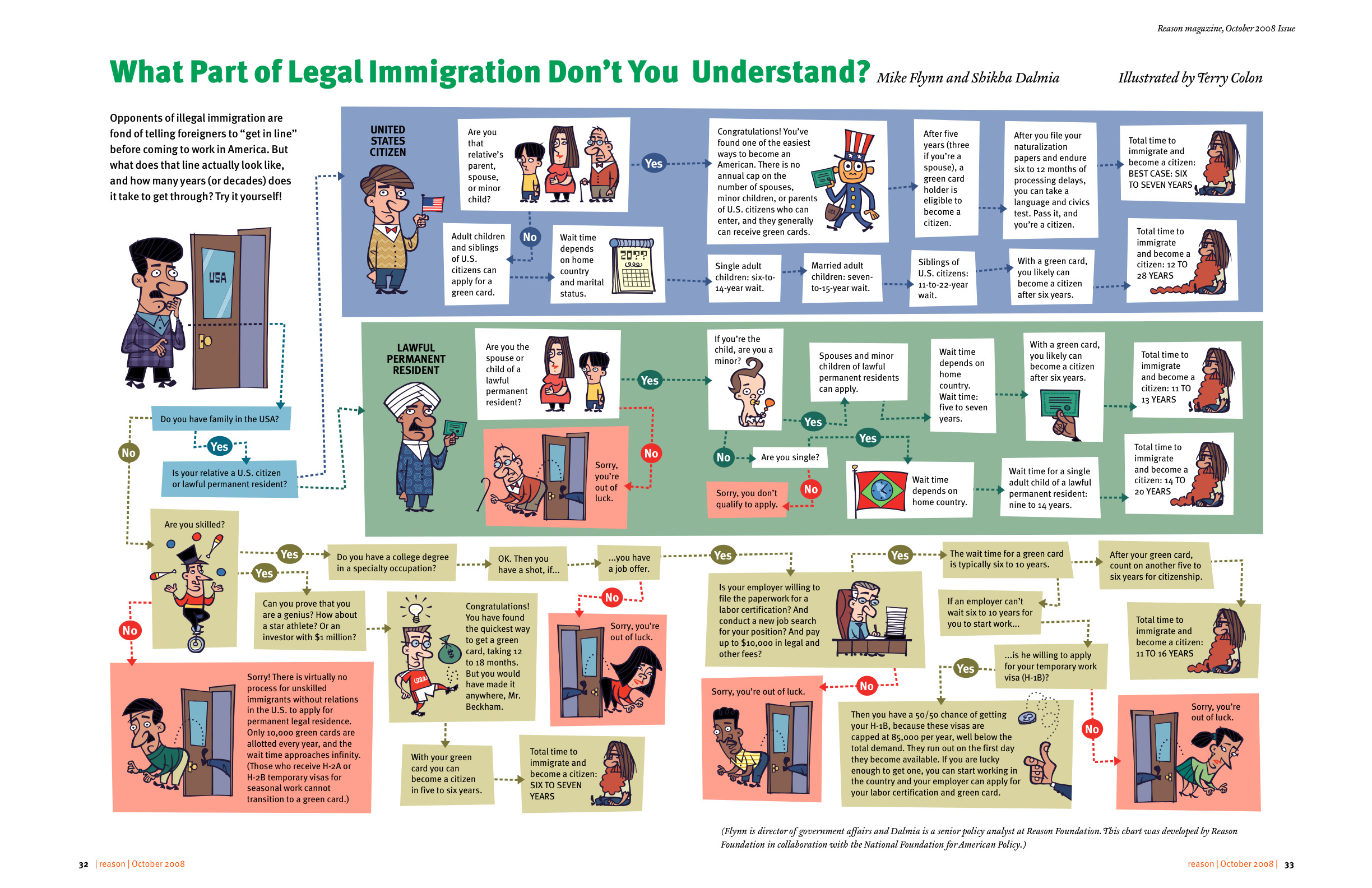
 Also: complete solidarity with my brothers and sisters who marched for immigration reform on May 1. As long as our nation keeps waving giant neon Help Wanted signs at our southern border, there will be poor, desperate people willing to risk everything to come here. All the ass-hattery in Arizona won't change that. What will help is the reform of antiquated laws that are "unwieldy, cumbersome, and excessively complex," "obtuse, and, at times, unintelligible." [Related: "What Part of Legal Immigration Don't You Understand?" from Reason.]
April 27, 2010
Pacific Flyway
 These Ross's Geese winter in California, raise young in the Arctic. Thanks to groups like Ducks Unlimited, the species is thriving and extending its range. Photo by NDomer73 on Flickr: click for big.
Migration is so awesome. Arrivals, departures... I'm missing these handsome little souls, who wintered in the backyard brush pile, and these busy gents, who wintered here too and have also headed north. [As a wise woman said: "Remember that someone else is waiting for them, and will be happy to see them arrive."] Great photos by The Digiscoper, Mike McDowell. And look who just showed up! A heart bird:
 Western Tanager, by Phae on Flickr. Click for bigger.
This coming weekend I'm planning to bird Big Morongo, which is Pacific Flyway Central at the moment. Migrants everywhere you look.
*************
An extraordinarily moving report on an 18,000 mile migration:
“I just did a talk yesterday for some colleagues at the U.S. Geological Survey,” Gill told me not long after E7 had been tracked to New Zealand. “And I showed these graphics of E7’s flight and said, ‘Okay, the flight is nonstop, no food, no water, no sleep as we know it, flying for eight days,’ and there was just this silence in the room, and I could see their minds trying to wrap around this—as does mine. I try to be objective as a scientist, but this just . . .” Gill’s sentence trailed off as he seemed unable to summon up the right word to describe his reaction.
 More about this amazing flight here, from the USGS Alaska Science Center Shorebirds Research website.
The last leg of E7's journey is the most extraordinary, entailing a non-stop flight of more than eight days and a distance of 7,200 miles [...]
Since they are land birds, godwits like E7 can't stop to eat or drink while flying over open-ocean. The constant flight speeds at which E7 was tracked by satellite indicate that she did not stop on land.
Godwits do not become adults until their 3rd or 4th year and many live beyond 20 years of age. If 18,000 miles is an average annual flight distance, then an adult godwit would fly some 288,000 miles in a lifetime. [Source.]
 E7's tribe: Bar-Tailed Godwits, by nkenji on Flickr. Click for big.
April 4, 2010
Birds of Pleasantville

Bird of Paradise [plant] on right, and Hooded Oriole [bird] on the left at a friend's feeder, April 3, 2010. Click to embiggen.
 This coming Friday will be the last day to count birds for the 2009-2010 season of Project FeederWatch, and I'm hoping for an oriole. I know they're in town. This most excellent Hooded Oriole was at a friend's home a few miles south of my place. Must rethink feeder placement...
Hello, tiny naked hatchlings! These little guys were in a nest hidden in a box in my friend's garage. Mom [a Bewick's Wren] was raging, so I left in a hurry.

Saturday was the Inland Orange Conservancy's Celebration of Citrus. [Yay, Old Grove Orange!]

House across the street, all pretty and spring-like:

 And when I got home, there was a Black-headed Grosbeak in the feeder tray. I could only photograph him through the screen and into the sun [weeps], but still — first one this year for me. A good way to end a good afternoon. Fly north, orioles...!
Related:
March 19, 2010
My spring-fu is strong
 No more winter browns. American Goldfinches are going through the closets, doing some spring cleaning, getting rid of the old stuff. [My local Goldfinches are a tad further along than this.] Photo by Doug Greenberg on Flickr.
 What the well-dressed male Goldfinch will be wearing in a few weeks. Photo by Eric Bégin on Flickr.
 Western Bluebird [and House Finches] by jek in the box on Flickr.
And they say we don't have seasons!
It went from wet and cold and dark to warm and sunny overnight. Birdsong everywhere, bazillions of birds, everything insanely green and sunny and beautiful. Hawks are nesting, turkey vultures are soaring, owl chicks are growing [owlets will be banded tomorrow [March 20] at 3:00 PM Pacific Time, webcam fans], and life is good.
I can't believe the Project FeederWatch season is almost over.
I looked out the kitchen window this afternoon and saw a big crowd bellying up to the birdbath: a flock of maybe 30 Cedar Waxwings, half a dozen Western Bluebirds, a Robin, some American Goldfinches, a warbler or two, all at the same time, everyone banking and landing, or drinking, or diving in and splashing. It was beautiful. All photos from Flickr/Creative Commons, because I don't digiscope. Yet.
 Cedar Waxwing by ru 24 real on Flickr.
 American Robin. Beautiful photo by cruadinx on Flickr.
February 16, 2010
Illinois: Golden Eagle attacks White-tailed Deer
 Ye gods.
Via the most excellent Birdchick: check out this amazing photo series of a Golden Eagle attacking a Whitetail. Props to Eric Walters of the Illinois Birders' Forum for posting the story and photos, and for having his camera handy for one of his "most exciting Illinois birding experiences over the last three decades."
February 12, 2010
Great Backyard Bird Count
 The guaranteed-to-make-you-gasp-out-loud-when-the-sun-hits-him-just-right Costa's Hummingbird. Photo by bcsing on Flickr, taken 1-08-10 on the Lower Colorado River.
Feeders filled — check. Binocs — check. Regional checklist — check. Perfect 74F weather — big giant check. [Sorry, snowpocalypse people.] This weekend it's all about The Great Backyard Bird Count, "an annual four-day event that engages bird watchers of all ages in counting birds to create a real-time snapshot of where the birds are across the continent."
Why participate? Aside from the fact that it's hella fun, the GBBC helps birds. And birds, as the great Canadian writer Margaret Atwood explains in this wonderful essay, are not merely beautiful and fascinating. Birds are the canaries of Coal Mine Earth.
[T]imes change, and we're heading back towards an older way of reading the birds. It's Fates of Nations time again, and ill omens seen through birds in flight – or the absence of them - and deadly prices to be paid for getting what you want. The birds have something to tell us again, and the truths are not comfortable ones.
Recording your counts this weekend during the GBBC is one way to help birds. Another way to help is by making birdhouses for them. The most excellent Birdchick shows us what a well-designed birdhouse should look like:
February 1, 2010
Our feathered friends
 Hail to thee, blithe spirit: Fossil feathers reveal dinosaurs' true colours. Above, an artist's impression of Sinosauropteryx, from Wikipedia.
I know what you're thinking. Looks just like a Spotted Towhee, right? Or close enough. One of my favorite visitors:
 Spotted Towhee by Rick Leche on Flickr.
A young Cooper's Hawk showed up in the yard last week. The first time I saw him he was staggering around on top of the brushpile like a drunk in a dark room, with a dozen sparrows and finches frozen beneath his talons. He fumbled around for a bit and flew off, but returned the next day and nabbed a warbler. Collateral damage: an American Goldfinch that I suspect was injured trying to escape. The goldfinch lay on the ground panting and flailing, and I got a shoebox with a towel ready and called one of our local wildlife rehabilitators.
Although some might be inclined to put a poor goldfinch out of his misery in a case like this, keep in mind that 1) killing him yourself is a violation of federal law, and 2) he might have an excellent chance of recovery with the help of a skilled rehabber*. Sad to report, this little guy didn't make it. Plan B: pop tiny body in freezer for delivery at later date to local raptor rehab.
*Related:
Hummingbird Hospital
Hummingbird Hospital Part 2
Hummingbird Hospital Part 3
Release Day
December 13, 2009
Bird sounds

Remember Dolphins Evolve Opposable Thumbs? One of the finest things the Onion has ever produced, if you ask me. Turns out Aves may be another group to keep an eye on.
If you watched the terrific video on parrot intelligence [H/T Heckled by Parrots, via Pet Connection], you probably caught a glimpse of a scientist in a lab. He was on screen for just a few seconds, at 5:44 in the vid. That's Erich Jarvis. Here's his Duke U. faculty page. From the NOVA site:
Erich Jarvis is a neurobiologist at Duke University Medical Center. He heads a team of researchers in the field of vocal communication. The Jarvis Lab's research of songbirds, parrots, and hummingbirds sheds light on how the brain is able to learn the behavior of sound. Jarvis's work on bird brains may have applications to the treatment speech problems in humans, such as stuttering. In October 2005, Dr. Jarvis won the National Institutes of Health's Director's Pioneer Award, which provides $500,000 per year for five years to researchers pursuing innovative approaches to biomedical research.
This summer Jarvis gave the keynote address at the annual meeting of the American Ornithologists' Union:
Vocal learners mimic sounds they hear, and then modify them to create new sounds. This may not be as much mindless parroting as we used to think—and here Jarvis singled out Irene Pepperberg in the audience, whose experiments with Alex the African Grey Parrot showed that he understood the semantics of a question like “How many total?” well enough to count and reciprocally communicate to Irene that two beads and four beads made “six.”
As for how vocal learning happens, Jarvis and colleagues reported in a staggering series of publications that while all birds use parts of the brain stem to produce songs, those with learned songs also use parts of the forebrain. Birds that learn their songs may even have more than one pathway controlling their learning. One pathway may promote variability in songs while another pathway produces more consistency, or stereotyping. The proper balance between the two pathways allows for vocal learning.
[...]
Jarvis basically threw out the window the received wisdom that humans’ large brain size and extensive brain folding are the explanation for our complex language. When he and colleagues described in 2005 how bird song and human speech actually make use of the same three forebrain regions, it made a splash. People reportedly called Webster’s and asked them to remove the term “bird brain” from the dictionary. [Source: Round Robin — The Cornell Blog of Ornithology.]
You can read more about the evolution of avian brain structure for vocal learning here, at the Jarvis Lab website.
*************
Also on the topic of bird communication: in a thoughtful [as in, both gracious and brainy] exchange of blog posts, David Sibley and Nathan Pieplow engage in a "very interesting and, I think, important discussion about a sea change that may be occurring in how birders listen to bird sounds." [That quote is from Pieplow's blog.] Sibley writes:
I learned bird songs decades ago through countless hours of field experience, supplemented by listening to a few recordings, reading detailed descriptions, and talking to other birders. It was a subjective, holistic approach to bird songs that led to a sort of gestalt style of identification – after you hear a sound often enough the identification just becomes second-nature.
Now, it still takes countless hours, but birders have a wealth of technological aids, allowing them to study and compare bird sounds with an ease and immediacy that was never possible before. In the modern world of ipods, sonagrams, and websites like xeno-canto, birders can examine the bird sounds directly, objectively, and in great detail. This may lead (as Nathan Pieplow admits) to a slightly greater emphasis on differences in pattern rather than the more subjective and hard-to-describe differences in tone.
Given how suggestible we are, and how tiny things can influence our perception, the detail-oriented objective approach to bird sound identification is probably better and more accurate.
And Pieplow replies:
[Sibley] learned sounds in the field; I learned them on the floor of my bedroom in South Dakota when I was in high school, playing the Peterson Birding By Ear tapes over and over again. Those tapes (which remain the best resource I’ve ever seen for people who want to learn bird sounds on their own) didn’t take a holistic, all-at-once approach; instead they took an analytic approach, grouping similar sounds together and then pointing out key field marks or “handles” — here a distinctive tone quality, there a distinctive rhythm — to distinguish sounds within the groups.
I’ve used this same basic approach to sound identification ever since: recognize a pattern, then focus on a piece of it. The pattern gets you to the right group; the pieces narrow the identification to species. Tone quality is part of this analysis, but not the most important part.
In fact, in some ways I think I place a pretty low priority on tone quality. For several years now, I have been convinced that tone quality is the slipperiest attribute of sound: the hardest to analyze perceptually, the hardest to describe. And I think tone quality is responsible for most of the disconnect between most descriptions of sounds and the sounds themselves. I de-emphasize it precisely because it is so difficult to categorize. Other attributes of sound are much easier to describe and compare, so those are the ones I focus on.
For the most part, I’m just doing what works for me, but I hope it works for other people as well. I really do believe in the objective, analytic approach.
*************
So who makes those field recordings of bird songs? Remarkable people like William Belton:
An internationally recognized ornithologist, Mr. Belton was almost single-handedly responsible for the current body of knowledge of the bird life of Rio Grande do Sul, the southernmost Brazilian state. His field recordings and specimens from the region are today in the collections of major research institutions. His two-volume study of the birds of the area is widely considered seminal.
[...]
Each [of Belton's recordings] was often the product of hours of standing stock-still in the wild at dawn, with swarms of biting insects for company. But the rewards were considerable: over the years, Mr. Belton captured many bird songs that had never before been documented.
[...]
The bird names alone read like found poetry. Mr. Belton recorded, among others, the variable screech-owl and the southern screamer; the freckle-breasted thornbird, the sooty-fronted spinetail and the rufous-browed peppershrike; the cattle tyrant, the masked yellowthroat and the piratic flycatcher; the squirrel cuckoo, the laughing falcon, the pectoral sandpiper and the gilded sapphire.
William Belton died in October at the age of 95. As a woman of a certain age, I love that Mr. Belton's ornithological career [of more than 30 years!] began following his retirement.
*************
A high school student asks Erich Jarvis, "African grey parrots can learn to speak, and they can be taught to tell color, and even to express themselves. And from what I observed on NOVA scienceNOW, some birds are capable of creating simple tools. But what about the other kinds of birds that are incapable of doing things like this? For example, a crow can make tools to obtain food but a pigeon can't. Why? Why is the parrot smarter than the finch? Is it brain size, the way they use their brains, or does the parrot have something the finch doesn't?"
An excerpt from Jarvis's answer:
[A]n argument can be made that having a brain means that you have intelligent behavior, regardless of whether you are a bird, mammal, reptile, or otherwise. But this is not the way many people think. There is something inherent in our human psyche that wants to make nonhumans "lower" in intelligence, and for us to form a scale of intelligence such that some species would be considered not intelligent.Different species have different behavioral capacities that vary in sophistication, Jarvis continues. However, brain size is not the main driving factor behind these complex behaviors. Instead, neural connectivity appears to be the driving force.
[...]
In fact, it is very difficult or almost impossible to make such a scale. Yes, a crow can make tools, and as far as I know, this has not been observed in pigeons. But pigeons have incredible visual memories and abilities, including the ability to learn how to distinguish different styles of impressionistic paintings. Chickadees, which are a type of songbird, can store over 3,000 seeds in the forest, and during the winter they remember where they put them and retrieve most of them. A parrot so far as I know has not been observed to do this, yet a number of parrot species can imitate some human speech.
And bird brains, as it turns out, are firing on all cylinders.
November 15, 2009
While you were birding [with some link goodness]
 Underwhelmed: landshark Lu [the cop-charger], Bounce, Smoke, Twig [curled up in Smoky's crate] and Gray try to curb their enthusiasm.
"It's the first weekend of Project FeederWatch! This is so totally cool and exciting! OMG, I think that's a Towhee! Guys, check it out! Guys...?"
Seriously, I'm very jazzed about Project FeederWatch and the whole citizen scientist experience. My count days are Tuesdays and Wednesdays. Coolest bird so far: the male American Kestrel — blue-gray, brick-red, indistinct as a watercolor — that plummeted out of nowhere and banked hard around the feeders. "The death rocket came blasting past..." There was a giant explosion of goldfinches, and I went "Oh, no!" and "OMG, where's the camera -"
The goldfinches were back within twenty minutes.
"Too bad about Fred."
"Yeah, sucks to be a passerine. You gonna finish that seed?"
My dogs ignore the feeder birds here at home, possibly because they are so used to seeing birds carrying on around feeders at the cabin. The birds in both places treat the dogs as if they were garden furniture, without actually perching on them. Thank heaven for that.
Meanwhile, some favorite links:
Photographer Monte Stinnett takes great photos of birds.
Ta-Nehisi Coates keeps getting better and better, and he was a terrific writer to start with. Check out this post on The Wilderness.
Much love and appreciation to the essential KC Dog Blog. I can't praise Brent's work enough.
For the Pit Bulls is most excellent, and now in the blogroll.
And a couple articles:
"In the last year, the French bulldog population has reached an unofficial count of 32 in the Ditmars section of Astoria, Queens."
Area Man Passionate Defender Of What He Imagines Constitution To Be. I laugh to keep from crying. H/T: Dissenting Justice.
September 24, 2009
Kind of a big deal
 More proof that black oaks rule.
A big deal for me, anyway. That little gent with the red bib and the big bill is a Rose-breasted Grosbeak. Hit the link and check out his range map. How'd you wind up in California, dude?
This is actually a wide-ranging [or wide-roving] species, and sightings here in California are "regular but rare," according to the Interwebs. I took these snaps near Big Bear Lake, CA in early August.


 "How you doin'?" Couple of nuthatches to the right of the feeder, and down in the lower right-hand corner, a female Black-headed Grosbeak. I think. Click for [a bit] bigger.
 The female's in shadow behind the feeder.
 March 19, 2009
State of the Birds 2009
 Peregrine falcon soars across Morro Rock in Morro Bay, California. Photo by kevincole on Flickr: click for big.
A beautiful video and an impressive, informative web site - check both out here: State of the Birds - the 2009 Report.
From the Foreword:
Birds are bellwethers of our natural and cultural health as a nation—they are indicators of the integrity of the environments that provide us with clean air and water, fertile soils, abundant wildlife, and the natural resources on which our economic development depends. In the past 40 years, major public, private, and government initiatives have made strides for conservation. Has it been enough? How are birds faring?Thanks to:
In an unprecedented partnership, government wildlife agencies and conservation groups have come together to produce this first comprehensive analysis of the state of our nation’s birds.
North American Bird Conservation Initiative, U.S. Committee
Association of Fish and Wildlife Agencies
U.S. Fish and Wildlife Service
I should add that hunters' groups like the most excellent Ducks Unlimited have done an extraordinary job of preserving, restoring and protecting habitat. Falconer, author and blogger Rebecca K. O'Connor just joined DU's Sacramento team -- you can read her fine blog here.
December 7, 2008
I [heart] penguins
 Young penguins in love. [Photo from the Daily Mail.]
I have loved penguins [and especially Adélie penguins like the ones above] ever since Mr. Popper. So I'm having a good time following biologist John Carlson's latest trip to the Antarctic, where he is probably counting penguins even as I blog. John usually writes the terrific Prairie Ice posts from his regular stomping grounds in Montana, but he's presently somewhere near Cuverville Island, which is... somewhere south of Tierra del Fuego.
Prairie Ice has great photos, too, and addictive links: I got hooked reading Arctic Auks, for example, and now I want to visit the Far North. How beautiful! No, wait — there are polar bears in the Arctic [and I'm not so sure about that "bear-proofing" thing]. Maybe the Antarctic would be better. What — no showers for how long...? Noah Stryker can tell you. Check out his Scott tent after a storm.
"Scott tent" — how reassuring is that. I think I'll stay here by the 'puter in SoCal and gear up for tomorrow's chilling 64 degrees F.
October 7, 2008
Where God made his nest
 Whenever I used to drive to a friend's place in eastern San Diego County I'd pass a freeway off-ramp to a place called Tierra Santa, and I'd start singing:
La Huasteca es tierra santa
La Huasteca es tierra santa
Donde Dios formó su nido
Donde Dios formó su nido...
The Huasteca is sacred ground, where God made his nest — where the thrushes sing their long notes that everyone loves —
For people who like wild birds and animals and books and travel and history and other fascinating essentials, natural history museums are the coolest places. They are especially great if you volunteer or know someone who works behind the scenes, because then you can look at the collections that aren't on exhibit.
Egg and Nest, by Rosamond Purcell, Linnea S. Hall and René Corado sounds like a behind-the-scenes, bird- and museum lover's dream book. Purcell took photographs of birds, nests and eggs at the Western Foundation of Vertebrate Zoology in Camarillo, a natural history collection specializing in the eggs and nests of birds from around the world, and naturalist Bernd Heinrich, Linnea Hall, the director of the foundation, and René Corado, its collections manager, supplied the text.
From a NY Times review of Egg and Nest and other bird-related books:
If you are wondering why anyone would spend a life in a pursuit as eccentric as collecting eggs and nests, Ms. Purcell’s work will tell you. She selected a range of specimens, eggs brightly colored and plain, and nests made conventionally of twigs or of materials as bizarre as nails. Then she photographed them in natural light.
Her luminous results explain without words why people have been collecting eggs and nests for centuries.
 Small photo: nest of a Bell’s Vireo. Above: nest of a Costa's hummingbird, on a cactus. [Both photos by Rosamond Purcell, from Egg and Nest.]
*************
The most excellent Birdchick and Diane of Ark Animal Answers remind us that there isn't much time left to comment on the evisceration by bulldozer of the Endangered Species Act. You have until October 14 to submit comments by phone, snail mail or hand delivery. The Sierra Club will do the heavy lifting for you if you submit a comment through their site.
You can try leaving comments here as well, by following the links.
Subscribe to:
Posts (Atom)