Showing posts with label birds. Show all posts

March 17, 2011

Nature, you so scary


"Vladimir! Put the !@$*!! camera down and get this thing off me!"

This lucky shot of an unlucky videographer [I've messed with the quality - follow link to the original] was taken by Vladimir Zaikin of Kazakhstan, and is posted on his photography blog here, in a post with other shots of raptors and their handlers. Mr. Z has some impressive landscape photos as well [and some NSFW shots elsewhere in the blog, FYI]. The photo above did some viral rounds a year or so ago, but never, as far as I can tell, with any kind of attribution. Thank you, TinEye and Google Language Tools.

August 15, 2010

The cuteness: my favorite nuthatch


More from the cabin deck. Pygmy Nuthatch photographed by Dianna of L.A. Audubon.

A good dad: Purple Finch and fledgling


Purple Finch dads totally rock :~) More photos by Dianna of L.A. Audubon, with a curiously colored Purple Finch added for good measure.


What but fear winged the birds...?

Been summering, off and on, at the family cabin in the San Bernardino National Forest near Big Bear Lake. A most excellent group from L.A. Audubon spent some time on the cabin deck a few weeks ago, and photographer Dianna took this great shot [click to embiggen] of a Cooper's Hawk:

Pine Siskins, beware!


[Jeffers: The Bloody Sire.]

June 6, 2010

June 6th 1806


"[T]he red has the appearance of being laid over a ground of yellow": Western Tanager by Phae on Flickr.

In what is now Lewis County, Idaho:
This morning Frazier returned having been in quest of some roots and bread which had left at the lodg of the Twisted hair when on his way to the fishery on Lewis's river. the Twisted hair came with him but I was unable to converse with him for the want of an interpreter, Drewyer being absent with Capt. C. This Cheif left me in the evening and returned to his village. Capt C. Visited the Broken Arm today agreeably to his promise; he took with him Drewyer and several others. they were received in a friendly manner. The Broken Arm informed Capt C. that the nation would not pass the mountain untill the latter end of the summer, and that with rispect to the young men whom we had requested should accompany us to the falls of the Missouri, were not yet scelected for that purpose nor could they be so untill there was a meeting of the nation in counsil. that this would happen in the course of ten or twelve days as the whole of the lodges were about to remove to the head of the Commeâp Creek in the plain near Lewis's river, that when they had assembled themselves they would hold a council and scelect the young men. that if we set out previously to that period the men would follow us. we therefore do not calculate on any assistance from them as guides, but depend more upon engageing some of the Ootlashshoots in the neighborhood of Travellers rest C. for that purpose. The broken arm gave Capt. C. a few dryed Quawmas roots as a great present, but in our estimation those of cows are much better, I am confident they are much more healthy. The men who were with Capt. C. obtained a good store of roots and bread in exchange for a number of little notions, using the Yanke phrase, with which their own enginuity had principally furnished them. on examination we find that our whole party have an ample store of bread and roots for our voyage, a circumstance not unpleasing. They retuned at 5 P. M. shortly after which we were visited by Hohâstillpilp the two young Cheifs who gave us the horses in behalf of the nation some time since and several others, who remained all night. The Kooskooske is about 150 Yds. wide at this place and discharges a vast body of water; notwithstanding it high state the water remains nearly transparent, and it's temperature appeas to be quite as cold as that of our best springs.

Western Tanager by The.Rain.Man on Flickr.

we meet with a beautifull little bird in this neighbourhood about the size and somewhat the shape of the large sparrow. it is reather longer in proportion to it's bulk than the sparrow. it measures 7 inches from the extremity of the beek to that of the tail, the latter occupying 2½ inches. the beak is reather more than half an inch in length, and is formed much like the virginia nitingale; it is thick and large for a bird of it's size; wide at the base, both chaps convex, and pointed, the uper exceeds the under chap a little is somewhat curved and of a brown colour; the lower chap of a greenish yellow. the eye full reather large and of a black colour both puple and iris. the plumage is remarkably delicate; that of the neck and head is of a fine orrange yellow and red, the latter predominates on the top of the head and arround the base of the beak from whence it graduly deminishes & towards the lower part of the neck, the orrange yellow prevails most; the red has the appearance of being laid over a ground of yellow. the breast, the sides, rump and some long feathers which lie between the legs and extend underneath the tail are of a fine orrange yellow. the tail, back and wings are black, ecept a small stripe of yellow on the outer part of the middle joint of the wing, ¼ of an inch wide and an inch in length. the tail is composed of twelve feathers of which those in the center are reather shortest, and the plumage of all the feathers of the tail is longest on that side of the quill next the center of the tail. the legs and feet are black, nails long and sharp; it has four toes on each foot, of which three are forward and one behind; that behind is as long as the two outer of the three toes in front.

Observed equal altitudes of the sun with Sextant.

The first description for science of my heart bird, the Western Tanager, written by Captain Meriwether Lewis. You can read the journals of his expedition here.

H/T: Idaho Birding Blog.

June 1, 2010

Why are bear cubs so adorable?

Dunno. They just are. I wuv them.

Now that the snow is melting, wildlife is popping up all over the SoCal nightly news reports: bears, mountain lions [see links below] and what-do-you-mean-this-isn't-New-Mexico far-ranging birds. [Shout-out to fellow birder S-, who photographed a Greater Pewee — is that an oxymoron? — up at Arrastre Creek today in the San Bernardinos. Since 1900 only a dozen or so of these Central American flycatchers have been spotted in California, according to the latest eBird stats. Darn day job... I'll get you anyway, Pewee!]

Topic. Bear cub adorableness:


Local mountain lion link fest:
"Just feet from my front door"
This just in: Wild animals live here
Woman survives mountain lion scare
Staring down nature's nose

May 18, 2010

Snowy


White bird in an orange tree.

This albino House Sparrow has been in and around the yard since May 12. In the photos her eyes look black — after looking at her through binoculars I'd say those eyes are very dark red. I think she's quite beautiful.

She does stand out, though. I hope some predator doesn't finish her off before she's had a chance to enjoy a bit of the world, if House Sparrows can be said to do such a thing.

Rose Red on the left, Snow White on the right, with sparrow and finch kids in between. Click for big.


Related:

Plumage variations: Albinism or Leucism?

Leucistic birds, from Stokes Birding Blog

White albino swallow sets twitchers a-flutter

Albinism in birds

May 9, 2010

Love your mother


Snowy Plover, by Jim Urbach for Audubon. [Click for big, and get the screensaver here.] In its report Gulf Oil Spill Pictures: Ten Animals at Risk, National Geographic writes that the Snowy Plover "has been identified by the National Audubon Society as one of the species most vulnerable to the Gulf of Mexico oil spill. Snowy plovers risk not only direct contact with the oil but might also be poisoned by eating small invertebrates and oysters tainted with oil."

Updates on the disaster in the Gulf of Mexico:
Workers on Oil Rig Recall a Terrible Night of Blasts

BP suffers setback in attempts to stem Gulf of Mexico oil flow. “I wouldn’t say it has failed yet,” Doug Suttles, BP’s chief operating officer, said at a news conference in Robert, La. “What we attempted to do last night hasn’t worked.”

Learning to Love the Sea, Then Torn From It. The Gulf oil spill "has stalled, and possibly ruined, the livelihoods of thousands."

Regulator Deferred to Oil Industry on Rig Safety

Gulf Coast Fishermen Fear That They Will Be Left With 'Crippled Industry'

Sabotage! Conspiracy! And Other Ways to Spin the Oil Spill. I laugh to keep from crying.


Happy Mother's Day!


"The oil slick in the Gulf of Mexico is seen from a helicopter." Photo by Rick Loomis for the Los Angeles Times.

May 8, 2010

International Migratory Bird Day


Above: Cerulean Warbler, Rufous Hummingbird, American Redstart. Below left: Wood Duck, American Oystercatcher, Puffin, Whooping Crane. All by Robert Petty for EFTA's Bird Day 2010.

Truth be told: every day is bird day here in Southern California. OK, every day is [or should be] bird day everywhere, but especially here. From the mountains to the sea [as a SoCal news icon used to say each evening] there are beautiful local birds and cool migratory birds everywhere you look.

International Migratory Bird Day "highlights and celebrates the migration of nearly 350 species of migratory birds between nesting habitats in North America and non-breeding grounds in Latin America, Mexico, and the Caribbean," and to quote from the essay Coming together to protect birds, "IMBD is not only a day to foster appreciation for wild birds and to celebrate and support migratory bird conservation; it is also is a call to action." We celebrate Bird Day [every day] by working toward:
• Protecting and managing green space.

• Landscaping with native plants in backyards and parks.

• Adopting architecture and lighting systems that reduce collisions.

• Making our communities hospitable to breeding, wintering and migrating birds that seek safe places to spend time and find food.

"Birds can save the world," writes Dr. John Fitzpatrick, Director of the Cornell Laboratory of Ornithology and professor in Ecology and Evolutionary Biology at Cornell:
[B]irds represent our most accessible and sensitive indicator of environmental health and ecological change. Today, thanks especially to the Internet, individual citizens have unprecedented opportunities to provide real data that answer important questions about bird populations at continental scales. Humans literally are beginning to serve as worldwide biosphere sensors. The question is, do we also have the will to self-correct? Birds present us with numerous motivations to do so, and an excellent barometer for measuring our successes and failures.
The real data Dr. Fitzpatrick is talking about can be viewed and explored at eBird, which is quite possibly the coolest data-gathering program of all time [and I'm not just saying that because I'm one of this year's top 100 eBirders in my county. Though I am]. To see just one example of eBird's citizen scientists at work, check out the eBird Gulf Coast Oil Spill Bird Tracker. The gadget displays recent sightings of ten focal species — data provided by a dedicated army of eBirders, citizen scientists providing "a real-time snapshot of the region’s birdlife, helping conservationists and researchers understand where, when, and how many of each species are currently occurring on local beaches and wetlands."

Wild birds embody the wonder and beauty of nature, its mystery and its miracles. The challenges wild birds face are challenges that sooner or later will confront us all. We owe it to ourselves, if not to the life of the skies, to celebrate Bird Day as if our future depended on it — because odds are, it does.

Related:
George Divoky's Planet. "This is a story about global warming and a scientist named George Divoky, who studies a colony of Arctic seabirds on a remote barrier island off the northern coast of Alaska. I mention all this at the start because a reader might like to come to the point, and what could be more urgent than the very health and durability of this planet we call Earth? However, before George can pursue his inquiry into worldwide climate change; before he can puzzle out the connections between a bunch of penguinesque birds on a flat, snow-covered, icebound island and the escalating threat of droughts, floods and rising global temperatures, he must first mount a defense -- his only defense in this frozen, godforsaken place -- against the possibility of being consumed, down to the last toenail, by a polar bear while he sleeps. He must first build a fence." A hands-down, must-read classic, even more important now than when it was first published back in 2002.

Media helicopters force Gulf birds to abandon nests. Holy crap, news people.

The know-how and materials already exist. We need to do the right thing

Efforts under way to douse nighttime lights on downtown Cleveland skyscrapers, saving millions of migrating songbirds


H/T to Mike McDowell for the JSOnline link.

May 2, 2010

May Day at Big Morongo


That's snow-capped San Gorgonio at 11,503 feet in the background. Big Morongo is a desert oasis: "The Morongo Fault, running through the canyon, causes water from melting snow on the surrounding San Bernardino Mountains to form Big Morongo Creek. The creek intermittently rises to the surface for just three miles, between the Mojave and Sonoran Deserts, before it disappears underground again. The water percolates into the sandy soil as it crosses the Morongo Basin, but as it enters Big Morongo Canyon, it encounters "fault gouge" (pulverized rock), which forces it above ground, creating a unique desert wetland with a series of perennial springs. " [Source]

It's wonderful to visit a birding hot spot like Big Morongo — as they say, the worst day birding there is better than the best day working. I kid. Love my job, folks! Back when California schools had more money, I'd take students on field trips to Big Morongo and we'd hike all over. Mesquite Trail, Canyon Trail, Yucca Ridge Trail... You can imagine how quiet the bus was on the way home. Good times.

Saturday's field trip was short on students, but included some terrific birders and some monster camera lenses.

Then there was me. Red-tailed Hawk nest by your blogger:


And the same nest photographed a few days earlier, by a dude with much better gear and a good eye.

Summer Tanager, by yours truly:


Summer Tanager [misidentified] by the same fine photographer who snapped the Red-tail pre-fledglings. You get the idea.

The Vermilion Flycatcher is probably the best-known bird at Big Morongo, and I wouldn't dream of subjecting you to my Vermilion photos. Check these out instead. [Big Morongo birds in the third link.]


Here's what American White Pelicans look like when they're riding thermals and assuming different shapes. [They made a Pointer!] They were very, very high. Our field trip leader shot them with his monster lens and enlarged the photo on his computer at home and counted them: 963. Props to Doug, who tore his eyes from the steep trail and saw them first:


We also checked out a Long-eared Owl nest in a big cottonwood just outside the Preserve. There were four impossibly huge, downy chicks perched in the branches near the nest, and one dead vole hanging from a twig. Mom was glaring down at us, so we tiptoed off, but I got a photo:


Here's my list for the day, around and inside the Preserve:

Gambel's Quail
Red-tailed Hawk
American Kestrel
Eurasian Collared-Dove
White-winged Dove
Long-eared Owl
Anna's Hummingbird
Dusky Flycatcher
Black Phoebe
Vermilion Flycatcher
Brown-crested Flycatcher
Western Bluebird
American Robin
Summer Tanager
Western Tanager
Hooded Oriole
Lesser Goldfinch
House Sparrow

American White Pelican
Black-chinned Hummingbird
Nuttall's Woodpecker
Bell's Vireo
Western Scrub-Jay
Common Raven
Oak Titmouse
Bushtit
Bewick's Wren
Phainopepla
Orange-crowned Warbler
Wilson's Warbler
California Towhee
Black-headed Grosbeak
House Finch

*************

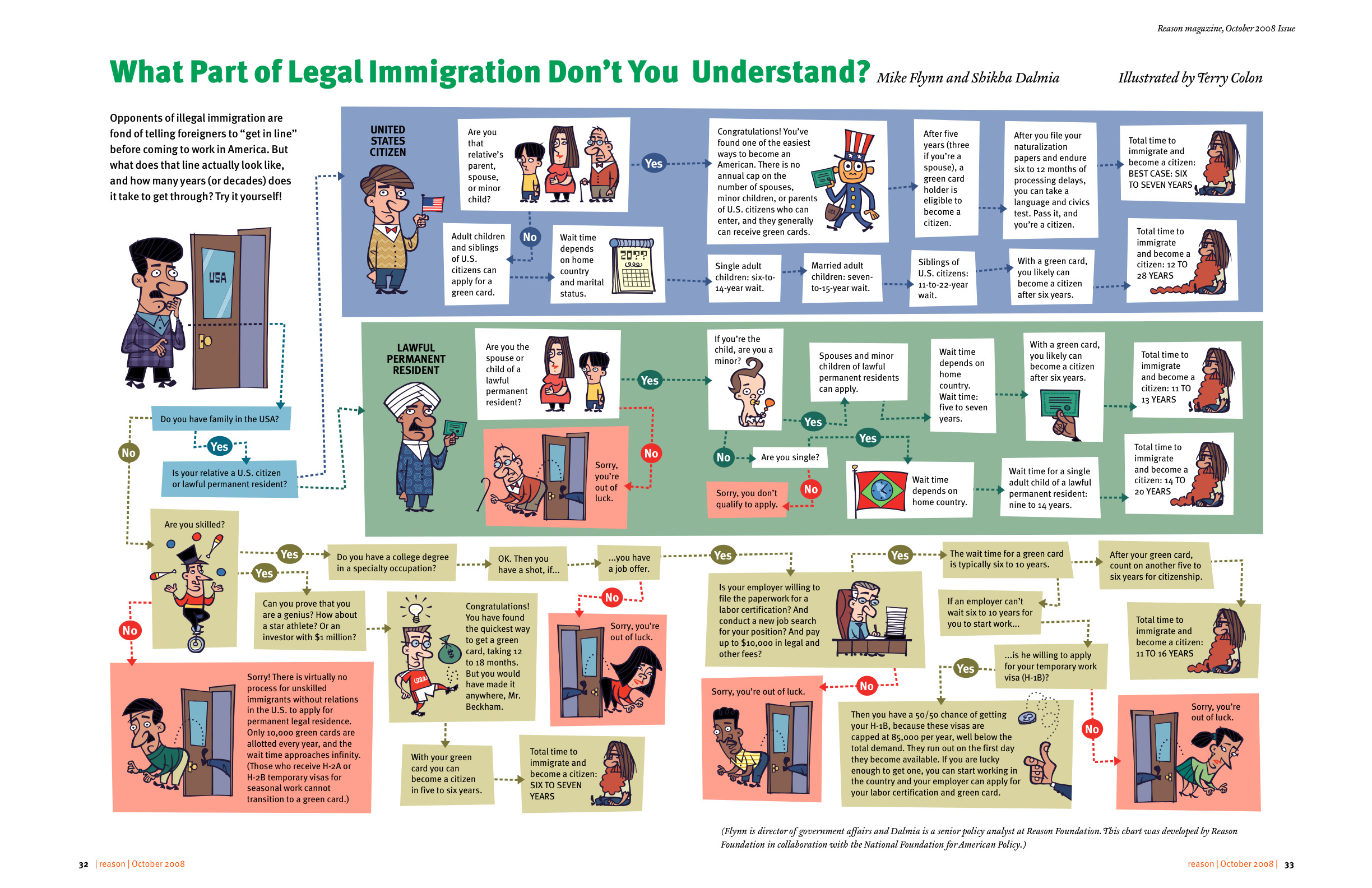
Also: complete solidarity with my brothers and sisters who marched for immigration reform on May 1. As long as our nation keeps waving giant neon Help Wanted signs at our southern border, there will be poor, desperate people willing to risk everything to come here. All the ass-hattery in Arizona won't change that. What will help is the reform of antiquated laws that are "unwieldy, cumbersome, and excessively complex," "obtuse, and, at times, unintelligible." [Related: "What Part of Legal Immigration Don't You Understand?" from Reason.]

"a commentary on our own culpability"


canary 2, 2008, by Kate McDowell.

Artist Kate McDowell's statement about her work begins:
We do not want merely to see beauty, though, God knows, even that is bounty enough. We want something else which can hardly be put into words--to be united with the beauty we see, to pass into it, to receive it into ourselves, to bathe in it, to become part of it. – C.S. Lewis.

In my work this romantic ideal of union with the natural world conflicts with our contemporary impact on the environment. These pieces are in part responses to environmental stressors including climate change, toxic pollution, and gm crops. They also borrow from myth, art history, figures of speech and other cultural touchstones.
You can view Kate McDowell's portfolio here. Her work, as she says, is "a painstaking record of endangered natural forms and a commentary on our own culpability."

Cuckoo. [In case it's needed, here is some context.]


Related:
Urgency increases as oil spill grows
How oil affects birds
Birds, Sharks, Whales, Sea Turtles, and Other Wildlife Threatened By Oil Slick Nearing Coast -- with information on "some of the birds and other wildlife experts are most concerned about."

April 30, 2010

Dead zone


"An oil-soaked bird floats dead," victim of the Cosco Busan oil spill in San Francisco Bay, 2007. SF Chronicle photos [above and left] by Michael Macor.


Gut-wrenching: the Gulf Coast oil spill "could become the nation's worst environmental disaster in decades."

"The terrible loss of 11 workers may be just the beginning of this tragedy as the oil slick spreads toward sensitive coastal areas vital to birds and marine life and to all the communities that depend on them", said Melanie Driscoll, an Audubon bird conservation director, who is monitoring the situation from her base in Louisiana. "For birds, the timing could not be worse; they are breeding, nesting and especially vulnerable in many of the places where the oil could come ashore." [Source.]

From a must-read post, Complete and Utter Disaster:
We’re in the midst of spring migration, a time of year when hundreds of thousands of neotropical migrating songbirds are teeming onto our continent from parts south, many of them taking a route that famously leads them to jump the Gulf of Mexico in one swoop. It’s a flight that can take up to 20 hours and leaves birds completely famished and exhausted. To say that it’s difficult is an understatement. It’s one of the truly amazing behaviors in the natural world. And now at the peak of migration, for those birds taking a path straight across the gulf with a bullseye on, perhaps, crucial bits of coastal habitat like Alabama’s Dauphin Island or Florida’s St. Mark’s NWR, the last stretch of migration has to be through a sooty, black curtain of oil smoke several thousand feet high.
Updates at the International Bird Rescue Research Center's blog.

All links in this post via the most excellent Mike McDowell, who wrote on Facebook that "everyone who voted for "Drill Baby Drill" [should] start heading down to the gulf coast to help clean oil off of critters."

As old and jaded and cynical as I am, I still have trouble wrapping my brain around the fact that we [consumers, voters, Americans] allow this sort of disaster to happen. It shouldn't have happened. It shouldn't be happening.


Commenter Bill on Coyote Crossing writes: "For all of you out there who care please lessen your use of the oil based economy, and, at the very least, don’t do business with BP."

April 27, 2010

Pacific Flyway


These Ross's Geese winter in California, raise young in the Arctic. Thanks to groups like Ducks Unlimited, the species is thriving and extending its range. Photo by NDomer73 on Flickr: click for big.

Migration is so awesome. Arrivals, departures... I'm missing these handsome little souls, who wintered in the backyard brush pile, and these busy gents, who wintered here too and have also headed north. [As a wise woman said: "Remember that someone else is waiting for them, and will be happy to see them arrive."] Great photos by The Digiscoper, Mike McDowell. And look who just showed up! A heart bird:

Western Tanager, by Phae on Flickr. Click for bigger.

This coming weekend I'm planning to bird Big Morongo, which is Pacific Flyway Central at the moment. Migrants everywhere you look.

*************

An extraordinarily moving report on an 18,000 mile migration:
“I just did a talk yesterday for some colleagues at the U.S. Geological Survey,” Gill told me not long after E7 had been tracked to New Zealand. “And I showed these graphics of E7’s flight and said, ‘Okay, the flight is nonstop, no food, no water, no sleep as we know it, flying for eight days,’ and there was just this silence in the room, and I could see their minds trying to wrap around this—as does mine. I try to be objective as a scientist, but this just . . .” Gill’s sentence trailed off as he seemed unable to summon up the right word to describe his reaction.

More about this amazing flight here, from the USGS Alaska Science Center Shorebirds Research website.
The last leg of E7's journey is the most extraordinary, entailing a non-stop flight of more than eight days and a distance of 7,200 miles [...]

Since they are land birds, godwits like E7 can't stop to eat or drink while flying over open-ocean. The constant flight speeds at which E7 was tracked by satellite indicate that she did not stop on land.

Godwits do not become adults until their 3rd or 4th year and many live beyond 20 years of age. If 18,000 miles is an average annual flight distance, then an adult godwit would fly some 288,000 miles in a lifetime. [Source.]

E7's tribe: Bar-Tailed Godwits, by nkenji on Flickr. Click for big.

April 18, 2010

Tweets from the past


Hasn't changed much since White's day: the village of Selborne, by Mockney Rebel on Flickr.

Ebert rouses his followers on Twitter:
Has ANYBODY noticed I've been starting each day with Gilbert White's "Natural History of Selborne?"
White's journal entries, as it happens, often make perfect tweets — and now I have another book to buy. From Ebert's link, The Natural History of Selborne:
Gilbert White (1720-1793) was the curate of the village of Selborne in Hampshire, England. He was a fellow of Oriel College, Oxford, a farmer in a very small way, and a passionate gardener. From an early age he was fascinated by nature and recorded his observations, and in later life began to correspond with several prominent ‘natural philosophers’. These letters were eventually edited and compiled in a book, The Natural History and Antiquities of Selborne (1789). It has never been out of print since its publication and established the genre of nature-writing in English. Gilbert White’s commitment to close observation of the mundane and everyday in nature– what we would now call ‘field study’– was pioneering and inspired Darwin; his influence felt in pastoral English writing from The Mill on the Floss to The Wind in the Willows.
Trivia: one of White's correspondents was the Welsh naturalist Thomas Pennant, first to describe the fisher [Martes pennanti] for science in 1771. I love fishers.

Here's the Penguin Classics edition of Gilbert White's book at Amazon. Honestly, Roger Ebert's Twitter feed is the reason God created the computer.


The Summer-Maker. [Check out these beautiful shots on Flickr.]


Related: Pacific fisher [Martes pennanti], at Sierra Forest Legacy.

Cosmic volcano photo


"Reportedly not photoshopped," tweets the most awesome and excellent Roger Ebert, and that's good enough for me. Photo by Marco Fulle, via Stromboli.org.

Volcano + lightning: awesome. Volcano + migrating birds: not good. Not good at all.

Also: Coachella loses "maybe a dozen bands." Good thing I decided to stay home this year!

April 4, 2010

Birds of Pleasantville


Bird of Paradise [plant] on right, and Hooded Oriole [bird] on the left at a friend's feeder, April 3, 2010. Click to embiggen.

This coming Friday will be the last day to count birds for the 2009-2010 season of Project FeederWatch, and I'm hoping for an oriole. I know they're in town. This most excellent Hooded Oriole was at a friend's home a few miles south of my place. Must rethink feeder placement...

Hello, tiny naked hatchlings! These little guys were in a nest hidden in a box in my friend's garage. Mom [a Bewick's Wren] was raging, so I left in a hurry.


Saturday was the Inland Orange Conservancy's Celebration of Citrus. [Yay, Old Grove Orange!]


House across the street, all pretty and spring-like:


And when I got home, there was a Black-headed Grosbeak in the feeder tray. I could only photograph him through the screen and into the sun [weeps], but still — first one this year for me. A good way to end a good afternoon. Fly north, orioles...!


Related:

March 19, 2010

My spring-fu is strong


No more winter browns. American Goldfinches are going through the closets, doing some spring cleaning, getting rid of the old stuff. [My local Goldfinches are a tad further along than this.] Photo by Doug Greenberg on Flickr.


What the well-dressed male Goldfinch will be wearing in a few weeks. Photo by Eric Bégin on Flickr.


Western Bluebird [and House Finches] by jek in the box on Flickr.

And they say we don't have seasons!

It went from wet and cold and dark to warm and sunny overnight. Birdsong everywhere, bazillions of birds, everything insanely green and sunny and beautiful. Hawks are nesting, turkey vultures are soaring, owl chicks are growing [owlets will be banded tomorrow [March 20] at 3:00 PM Pacific Time, webcam fans], and life is good.

I can't believe the Project FeederWatch season is almost over.

I looked out the kitchen window this afternoon and saw a big crowd bellying up to the birdbath: a flock of maybe 30 Cedar Waxwings, half a dozen Western Bluebirds, a Robin, some American Goldfinches, a warbler or two, all at the same time, everyone banking and landing, or drinking, or diving in and splashing. It was beautiful. All photos from Flickr/Creative Commons, because I don't digiscope. Yet.

Cedar Waxwing by ru 24 real on Flickr.


Cedar Waxwings by drewweber on Flickr.


American Robin. Beautiful photo by cruadinx on Flickr.

March 10, 2010

Proud parents of a small egg


California Condor country: Sunset at the Pinnacles National Monument, by StefanB on Flickr.

This story is great, and the headline rocks: Calif condor couple lays first egg at Pinnacles National Monument in more than a century. Congratulations to the happy couple!
A female released in 2004 in the Central California park and a male released the same year 30 miles west at Big Sur had been observed engaged in courtship behavior earlier this year, park spokesman Carl Brenner said.

"They are now the proud parents of a small egg," Brenner said.

Biologists confirmed the presence of the egg after hiking to the site on Friday.

In 1982, the last 22 California condors were placed in a captive breeding program. Today, there are 348 in the world, with about 180 flying free at three locations in California and at the Grand Canyon in Arizona. Another dozen are in Baja California.

The goal is to have 450 birds in three distinct populations, with 15 breeding pairs in each group.
Read it all here.

Above left: Condor buddies, by Doug Greenberg on Flickr.

February 16, 2010

"What is the first law of the foot?"

Photographer Dave Bonta writes: "A first-year female captured on our property and fitted with a transmitter as part of a research project by the National Aviary and the Carnegie Museum's Powdermill Avian Research Center. See here for background, and the main blog post here." Photo from Dave Bonta's Flickr set, golden eagle, via that Illinois Birders' Forum thread from the previous post. Click for big.

February 12, 2010

Great Backyard Bird Count


The guaranteed-to-make-you-gasp-out-loud-when-the-sun-hits-him-just-right Costa's Hummingbird. Photo by bcsing on Flickr, taken 1-08-10 on the Lower Colorado River.

Feeders filled — check. Binocs — check. Regional checklist — check. Perfect 74F weather — big giant check. [Sorry, snowpocalypse people.] This weekend it's all about The Great Backyard Bird Count, "an annual four-day event that engages bird watchers of all ages in counting birds to create a real-time snapshot of where the birds are across the continent."

Why participate? Aside from the fact that it's hella fun, the GBBC helps birds. And birds, as the great Canadian writer Margaret Atwood explains in this wonderful essay, are not merely beautiful and fascinating. Birds are the canaries of Coal Mine Earth.
[T]imes change, and we're heading back towards an older way of reading the birds. It's Fates of Nations time again, and ill omens seen through birds in flight – or the absence of them - and deadly prices to be paid for getting what you want. The birds have something to tell us again, and the truths are not comfortable ones.

Recording your counts this weekend during the GBBC is one way to help birds. Another way to help is by making birdhouses for them. The most excellent Birdchick shows us what a well-designed birdhouse should look like: